
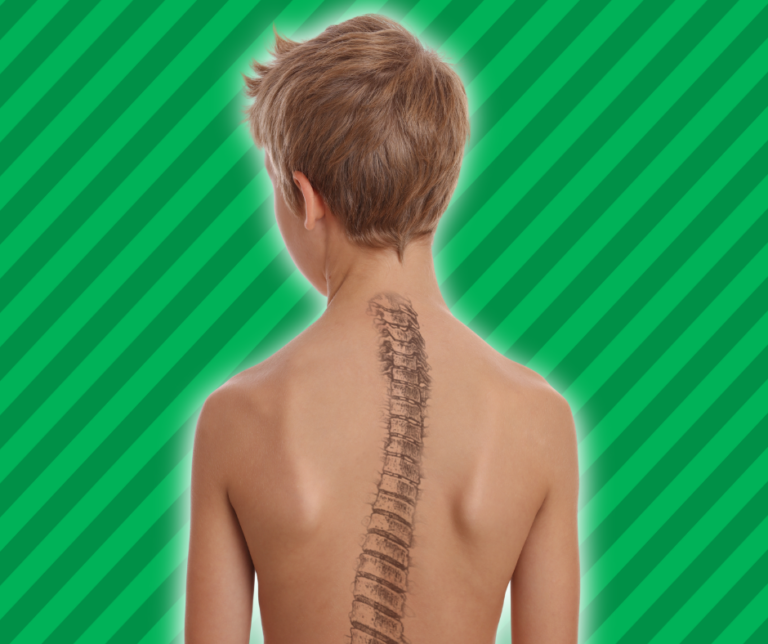
What to Expect in a Schroth Treatment Session for Scoliosis
The Schroth Method is a research-backed, proven treatment to help children, teens, and adults with scoliosis. Schroth Therapy…



Get in touch with Rose
Rose McLean, PT, DPT, c/NDT, is co-owner and lead physical therapist at Chicago Pediatric Therapy & Wellness Center, where she has dedicated over 20 years to helping children with developmental challenges achieve their movement goals. Rose's specialized focus on pediatric physical therapy, combined with her commitment to multidisciplinary collaboration, has made her a trusted resource for families navigating motor delays, neurological conditions, and complex developmental needs throughout Chicago. Rose earned her Doctorate in Physical Therapy from Northwestern University in Chicago in 2004, where she received rigorous training in both pediatric and neurological rehabilitation. She began her clinical career at Cincinnati Children's Hospital, consistently ranked among America's top pediatric medical centers, where she gained invaluable experience treating children with diverse and medically complex conditions. This foundation shaped her evidence-based, child-centered approach to therapy. Beyond her doctoral training, Rose holds certification in Neurodevelopmental Treatment (NDT), a specialized intervention approach for children with cerebral palsy, neurological impairments, and other developmental disorders. She also maintains registration with Illinois' Early Intervention Program, allowing her to provide services to infants and toddlers (birth to age 3) in both home and clinic settings. Rose's therapeutic style is distinctively playful and highly individualized. She invests time in understanding each child's personality, interests, and motivators, then designs sessions that feel like play while targeting specific developmental goals. Whether working on strength, balance, coordination, or motor planning, Rose ensures therapy remains engaging and appropriately challenging. In 2014, Rose partnered with her husband Patrick to establish Chicago Pediatric Therapy & Wellness Center, driven by a vision that pediatric therapy should be comprehensive, collaborative, and convenient. She wanted to eliminate the fragmentation families often experience when their child needs multiple therapies—instead offering coordinated care where physical therapists, occupational therapists, speech-language pathologists, behavior analysts, and social workers communicate regularly about each child's progress. Rose also prioritized creating community spaces where families can connect and children can learn social skills alongside therapeutic development.
Read Less →By: Chicago Pediatric Therapy & Wellness Center
Author: Nat Vikisreth DT, Ed. M, CEIM
Here is one parenting dilemma: The American Academy of Pediatrics (AAP) recommended parents avoid any screen time for children younger than two years old; however, you are passionate about maximizing your child’s learning while they are sitting on the floor waiting for you to finish cooking dinner. The iPad is on the couch next to them and running a learning or music app while they are waiting for you does not seem like a terrible idea at all. Or, you simply want to catch a breath, to refuel yourself in order to be able to carry on as the fantastic parent that you are. And it is just one Sesame Street song on your iPhone! What do you do?
If that is what your parenting reality is, you are not alone! Putting on the therapist hat, we always encourage parents to be well-informed about any issue they are interested in and then make it work for them and their family. It is rare to have one right strategy that works for all families. We individualize our recommendations for you; you adapt them and make them work for yourself and your family. In this case, we inform parents of both the pros and cons of using technology and humbly support them when they are ready to make decisions.
We now know that young children learn best by using all of their senses and body to explore the environment. They also actively and effectively learn when they interact with you, who respond sensitively and lovingly to their movements, sounds, and eye contacts.
Keeping this is mind, when a book is read by an e-reader, both of you might be paying attention to the device instead of to each other. Your child might miss those moments when she gets to see your facial expressions and learn words that accompany them. Perhaps, she misses the opportunity to meet your eye contact and enjoy the comfort and security of their relationship with you. The same principles apply to watching something on an iPad, even if the app boasts to teach your child something. Why would your child learn the word “apple” better from a device than from you while you are holding an actual apple that they can see, smell, touch, and taste? When they attempt to say a part of “apple,” you clap and cheer in delight. You are a powerful reinforcing force that makes them want to learn and try saying “apple” again and again.
So, let’s get to the point. You are the most important, powerful, and fun toy your child can ask for. However, technology does have its place and there are ways to use technology wisely with your child.
Use technology only as a tool to enhance learning and not as a substitute of you. You are your child’s first, most significant, and life-long teacher. When you use technology, assume the role of a facilitator. Pointing to the screen, pausing, and spending time talking about what is on the screen are simple ways to engage your child without having to compete for their attention with the device. Technology is a great tool as long as you make the experience interactive and fun.
You can watch a clip together and then have off-screen time to play with each other or with other toys. During the off-screen play, you may talk about the characters in the clip you have watched together and reenact the scene.
To summarize, put yourself in between your child and your device as much as possible to make the learning experience interactive. Your child will not benefit from technology alone since they need you and your interaction to drive and solidify their learning and development.
For more information, please visit the following links:
The American Academy of Pediatrics (AAP)
http://www.aap.org/en-us/about-the-aap/aap-press-room/Pages/Managing-Media-We-Need-a-Plan.aspx
http://www.aap.org/en-us/about-the-aap/aap-press-room/Pages/Babies-and-Toddlers-Should-Learn-from-Play-Not-Screens.aspx
The National Association for the Education of Young Children (NAEYC)
http://www.naeyc.org/content/technology-and-young-children/infants-and-toddlers
http://www.naeyc.org/files/naeyc/PS_technology_WEB.pdf
The New York Times
http://www.nytimes.com/2014/10/12/us/is-e-reading-to-your-toddler-story-time-or-simply-screen-time.html?_r=0
Take the first step towards supporting your child's development.
Rose McLean

 Cara Lucas
 Melina Segneri
Our expert team is here to help. Schedule a consultation today.