
Pairing in ABA Therapy: How Chicago Therapists Build Rapport Before Teaching Begins
Recent CDC prevalence data show that about one in 31 children in the United States now has autism.…



Get in touch with Melina
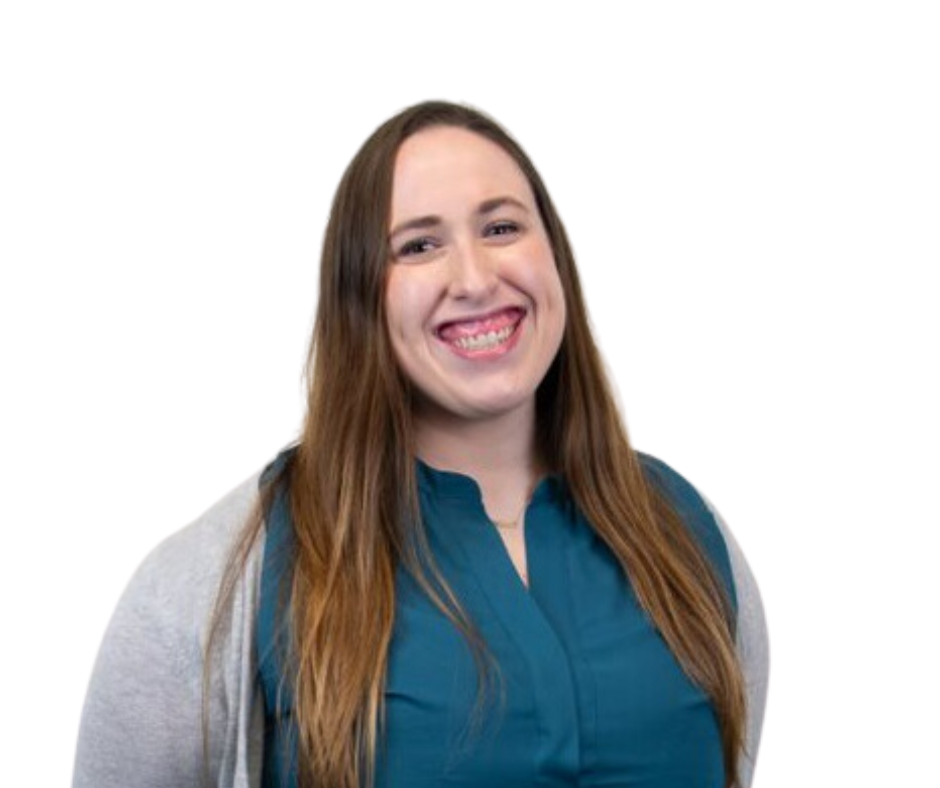
Melina Segneri, MS, BCBA, serves as Lead Board Certified Behavior Analyst at Chicago Pediatric Therapy & Wellness Center, where her rapid professional growth and commitment to clinical excellence have positioned her as a key leader in the ABA program. Melina's journey at the clinic began in 2020 when she joined as a Registered Behavior Technician (RBT). Her dedication, clinical skill, and leadership potential were immediately evident, and upon completing her BCBA credentials in 2021, she was promoted to Board Certified Behavior Analyst. She now serves in the Lead BCBA role, supervising fellow BCBAs and ensuring high-quality, coordinated care across the clinic's multidisciplinary environment. Melina's academic foundation began at Northern Illinois University, where she earned a Bachelor of Science in Rehabilitation and Disability Services in 2018. This program provided broad exposure to disability services, rehabilitation counseling, and behavior support systems. She continued her specialized training at Southern Illinois University-Carbondale, earning a Master of Science in Behavior Analysis and Therapy in 2021. Her master's thesis, which focused on Acceptance and Commitment Therapy (ACT), was published and reflects her dedication to advancing evidence-based practice within the field. Melina maintains extensive training in ACT implementation and integrates these principles into her daily clinical work and curriculum supervision within the ABA department. In her Lead BCBA role, Melina carries multiple critical responsibilities. She supervises and mentors BCBAs within the clinical setting, ensuring quality care and seamless collaboration with speech therapists, occupational therapists, and physical therapists. She developed, organized, and now oversees the social group program at Chicago Pediatric Therapy & Wellness Center, which serves children ages 5 through 18 in structured peer interaction settings designed to build social skills, emotional regulation, and friendship development. Additionally, Melina holds an Organizational Behavior Management Level 1 Specialist certificate—an advanced credential that applies behavior analysis principles to workplace systems. In this capacity, she supports employees through surveys and systematized assessment scales, working to enhance both clinical effectiveness and job satisfaction. Her dual focus on client outcomes and staff well-being reflects a holistic understanding of how organizational health directly impacts the quality of care families receive.
Read Less →Important Note for Families: This information is for educational purposes only and does not constitute medical advice, diagnosis, or treatment recommendations. Only qualified medical professionals (such as developmental pediatricians, child psychologists, or psychiatrists) can diagnose autism spectrum disorder. The information about autism levels, signs, and therapies is provided to help you understand your child’s potential needs, but every child is unique. Always consult with qualified healthcare providers and Board Certified Behavior Analysts regarding your child’s specific evaluation, diagnosis, and individualized care plan.
Many Bucktown families spend months navigating evaluations and appointments. When an autism diagnosis is finally confirmed by your child’s diagnostic team (typically including a developmental pediatrician, psychologist, or psychiatrist), it can feel validating and challenging at the same time. Learning about the types of autism Bucktown families may encounter is often the next step, as advocacy continues well beyond diagnosis and into everyday life.
As every child is unique, no two autism diagnoses look the same, even when there are some shared traits. If you suspect your child may have autism, the first step is seeking a formal evaluation from a qualified diagnostic professional, such as a developmental pediatrician, child psychologist, or psychiatrist.
Board Certified Behavior Analysts (BCBAs) and ABA therapists work with children after a diagnosis is made. They provide assessment, treatment planning, and ongoing support through ABA therapy, but they do not diagnose autism spectrum disorder. What were once called ‘types’ of autism are now understood as levels of support, and knowing which behaviors to look out for helps you support your child best.
You may also benefit from additional guidance, like getting ABA therapy in Bucktown for children with autism or contacting social services.
You may still hear terms like Asperger’s syndrome, high-functioning autism, or, less commonly, Pervasive Developmental Disorder-Not Otherwise Specified (PDD-NOS). In the past, clinicians used these terms to describe different presentations of autism, but they don’t always reflect a child’s individual support needs.
A Harvard article explains how these terms were replaced in 2013 when the Diagnostic and Statistical Manual of Mental Disorders (DSM-5) combined them into one diagnosis: Autism Spectrum Disorder (ASD). The National Institute of Mental Health notes this decision was made to recognize autism as a broad spectrum instead of fracturing the diagnosis into sets of separate conditions.
The recognition of ASD is groundbreaking for parents, as it sheds light on how your child communicates and experiences the world. Clinicians find it’s better to discover what level of support helps children thrive rather than focusing on the type of autism they have. For many, the support includes early intervention.
Many parents find reassurance in knowing that autism is now understood as a spectrum of support needs rather than rigid categories. The focus has shifted from labeling subtypes to understanding each child’s individual strengths, challenges, and the specific support that helps them thrive.
When your child goes for their assessments, the focus is on identifying their level of support, not labeling a type of autism. According to the NIMH, clinicians assess their level by considering patterns in social communication and restricted or repetitive behaviors, including sensory sensitivities, to determine support needs.
Children at Level 1 may:
Children at Level 2 often have:
Children at Level 3 may experience:
Both NIMH and Harvard Health Publishing highlight one very important thing: a child’s support needs can change over time, and the way autism presents varies widely from child to child. With appropriate interventions and as children develop new skills, some may require less intensive support in certain areas. However, autism itself is a lifelong neurodevelopmental difference.
What changes is the level and type of support needed, not whether a child has autism. Children learn and grow, especially when they receive the right guidance and support. Your child’s needs will evolve, and they may require different types and levels of help as they develop.
Seeking out additional information is natural when clinicians confirm that your child is on the autism spectrum. During your research, you may come across terms like “genetic subtypes” and “syndromic autism.”
You may also notice references to rare conditions linked to autism. Harvard Health Publishing and the NIMH emphasize that autism is identified by patterns in communication, interaction, play, and behavior, rather than by a specific gene or medical test.
New research conducted in a 2025 Princeton University study reveals biologically distinct autism subtypes. These biological subgroups are not used in clinical diagnosis, but they may help researchers deepen their understanding of autism or inform more personalized support in the future.
Chicago offers various autism resources to parents. You can reach out whenever you feel unsure. Your child’s care team will happily assist with guidance and information, and you always have support as you navigate this journey.
As a Bucktown parent, you may recognize shared traits across the autism spectrum while still seeing how your child expresses them in their own way. The NIMH notes that these differences appear in four main areas:
While shared traits can help identify patterns, your child’s growth and progress reflect their own abilities, strengths, and personality. Understanding the types of autism Bucktown families may see can help put these traits into context. Research from The Hands in Autism program at Indiana University reveals that children on the spectrum often show remarkable strengths, which can help build confidence:
ABA therapy for Bucktown residents becomes a powerful tool to help your child thrive once you understand their unique autism traits and their natural strengths.
Your child learns and communicates in their own unique way, and therapy helps them feel more confident in everyday moments. Therapy focuses on building skills that help your child navigate daily routines, participate in play at school, and express their needs more effectively.
Your child can benefit from supportive, individualized interventions, as emphasized by the NIMH. The additional support may strengthen communication, social interactions, and daily functioning across the autism spectrum. Autism therapists serving Bucktown provide coordinated services that help your child thrive.
Occupational therapy supports sensory processing, emotional regulation, and motor skills. Your child participates in play-based, goal-driven activities that help them feel more comfortable in their bodies and daily routines. Harvard Health Publishing notes that sensory experiences can feel overwhelming and challenging for many children. Appropriate support is key to making everyday activities more manageable.
Speech therapy focuses on helping your child develop communication skills that work best for them. They may learn ways to fully express themselves through spoken language, gestures, pictures, or augmented and alternative communication (AAC). Speech therapists serving Bucktown families also support children with autism by building social communication skills such as understanding social cues and expressing emotions in healthy ways.
Applied behavior analysis (ABA) can help children learn functional, real-life skills such as independence in routines. Therapy is individualized and developmentally appropriate, using structured strategies that reflect each child’s needs across the types of autism Bucktown clinicians assess. ABA therapy supports growth while encouraging individuality and natural strengths, allowing your child to flourish.
Your family’s well-being matters too. Social workers in Bucktown provide emotional support, help you navigate family resources, and guide you through school systems and all touchpoints your child might come across on an ordinary day.
When therapists work together, children benefit from consistent, shared strategies across environments. Collaborative care means you receive coordinated support from a group of professionals who know your child and have shared goals. At every support level, therapy is about helping your child build on who they already are and grow new skills at their own pace.
Seeing your child grow and engage with Bucktown life in their own way brings moments of pride and possibility. An autism diagnosis is the starting point for understanding how to best support your child. While families often search for the types of autism Bucktown providers diagnose, today’s approach focuses on identifying the level of support your child needs rather than defining a specific “type” of autism.
At Chicago Pediatric Therapy & Wellness Center, your family is supported by a collaborative team of clinicians who provide thoughtful guidance, individualized care, and practical strategies that extend beyond the clinic. Because we offer ABA, OT, speech therapy, and social work under one roof, you don’t need to juggle multiple providers.
Wherever you are in your journey, our multidisciplinary team is here to guide and support your family. Together, we support your child’s development and celebrate who they are.
Contact our experienced team to schedule a visit today!
Take the first step towards supporting your child's development.
Cara Lucas
 Nathalie Deutsch
 Patrick McLean
Owner
Patrick McLean
Owner
Our expert team is here to help. Schedule a consultation today.