

What to Expect in a Schroth Treatment Session for Scoliosis
The Schroth Method is a research-backed, proven treatment to help children, teens, and adults with scoliosis. Schroth Therapy…



Get in touch with Kirsten
Kirsten Amundson, MOT, OTR/L, is a licensed pediatric occupational therapist who has distinguished herself as a specialist in pediatric pelvic floor therapy—an emerging and essential area of pediatric rehabilitation. Since joining Chicago Pediatric Therapy & Wellness Center in 2021, Kirsten has helped families navigate challenges that many parents struggle to discuss, bringing clinical expertise and compassionate support to issues including toileting difficulties, bedwetting, constipation, bowel and bladder control, and sensory-related pelvic concerns. Kirsten's academic foundation was built at Saint Louis University, where she completed her Bachelor's degree in 2018 and immediately continued into their Master of Occupational Therapy program, graduating in 2019. This comprehensive educational pathway provided her with strong clinical reasoning skills and a pediatric-focused lens from the start of her career. In her clinical practice, Kirsten takes a holistic, play-based approach to therapy. Children in her sessions engage with age-appropriate tools and activities—using crayons, manipulating utensils, building with blocks, navigating obstacle courses—all while working toward functional goals that improve independence and quality of life. Kirsten's treatment plans are highly individualized, reflecting each child's unique needs, developmental level, sensory preferences, and family circumstances. Her specialized focus on pediatric pelvic floor therapy sets her apart in the field. Many families don't realize occupational therapists can address toileting challenges, and Kirsten's expertise fills a critical gap. She helps children develop body awareness, establish healthy bathroom routines, manage sensory sensitivities related to toileting, and overcome physical or behavioral barriers to continence. Her approach empowers rather than shames, recognizing that these challenges significantly impact children's confidence and social participation. Beyond direct patient care, Kirsten serves as co-leader of the occupational therapy team alongside Joanna Pasheluk. In this leadership capacity, she mentors newer therapists, facilitates case discussions, ensures evidence-based practice standards, and promotes seamless collaboration with physical therapists, speech-language pathologists, and behavior analysts. Kirsten's commitment to involving parents throughout the therapeutic process ensures skills generalize across all the environments where children function.
Read Less →Medical Disclaimer: This content is for educational purposes only and does not constitute medical advice, diagnosis, or treatment recommendations. Developmental milestones vary widely among children. Always consult qualified healthcare professionals, including pediatricians, occupational therapists, or developmental specialists, for personalized evaluation and guidance regarding your child’s development. Individual outcomes vary, and no therapy guarantees specific results.
You watch your child at Palmer Square Park, reaching for the climbing structure. Their tiny fingers slide off, and uncertainty crosses their face. You notice that same hesitation when they need extra time with a zipper or prefer observing art projects at the Logan Square Library.
These moments matter. The fine motor skills Logan Square children need to zip coats, hold crayons, and climb with confidence are all learnable. Our team helps you build these skills through ABA therapy for families from Logan Square.
This guide explores what dexterity means, age-specific milestones, and practical ways to transform your living room into a launchpad for your child’s growing independence.
Fine motor skills are the small movements we make with our hands and fingers, enabling us to do more complex tasks. The definition of dexterity falls under fine motor skills and is the quality of those movements.
Dexterity is divided into manual dexterity and finger dexterity. Manual dexterity refers to the skillful use of our whole hands to perform tasks. Finger dexterity is a type of manual dexterity that focuses on how well we independently move our fingers and thumbs.
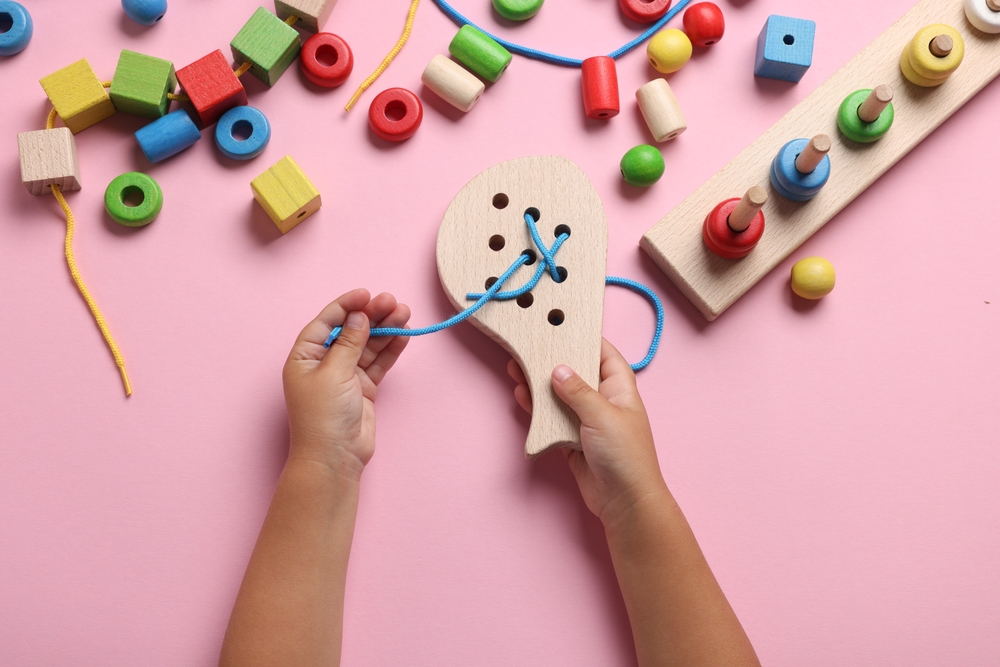
These skills are learned and developed through practice. You can encourage growth through play with specific toys that challenge small muscle groups. Play makes practicing these movements fun, which helps children transition skills into the real world smoothly. Fine motor skills don’t develop in isolation. They build on a foundation of larger movements.
Gross motor skills use large muscle groups for whole-body movements like running, jumping, and climbing. Fine motor skills focus on small muscle groups for precise actions like drawing, buttoning, and cutting. Core strength serves as a gross motor foundation that supports all fine motor control. Children need opportunities to develop both physically and mentally.
Here’s how your child’s larger movements create the stability needed for smaller, precise actions:
| Gross Motor
Skill |
Fine Motor Skill | Neighborhood Example | Core Benefit |
| Postural Control | Sustained Pencil Grip | Sitting upright to use a crayon. | Improved performance in school and support for emotional regulation. |
| Shoulder Stability | Finger dexterity | Holding the arm steady while using scissors for art. | Reduced hand fatigue in sustained tasks like writing. |
| Bilateral Coordination | Two-Handed Fastening | Using both hands together to zip a coat. | Increased independence in daily self-care routines. |
| Upper Limb Control | Controlled Feeding | Using biceps and triceps power to lift a spoon. | Ability to feed themselves independently. |
| Vestibular Balance | Visual Tracking & Accuracy | Staying balanced while looking down to tie one’s shoes. | Improved focus and success during complex interactive play |
Gross motor skills support children’s emotional development alongside their physical and cognitive growth. They’re linked to spatial memory and academic performance in subjects like science. They also enhance emotional regulation by teaching frustration tolerance during challenging physical play, aiding impulse control, and promoting calmer responses. Understanding how these skills work together helps you recognize what to look for as your child grows.
Every small victory is a stepping stone toward a future where your child can navigate life without limits. We use these checkpoints to track fine motor skills in Logan Square children as they grow closer to daily functional independence. Monitoring development allows us to celebrate every new skill unlocked.
Your baby moves from involuntary reflexes to purposeful actions like playing games with you, waving goodbye, and basic speech during the first two years. These small abilities help your child to forge emotional bonds, secure attachment, and experience joy through responsive play.
These are the movements to look for:
Through fine motor practice, caregivers and children build reciprocal interactions. Caregivers smile, give affection, make eye contact, and strengthen attachment through teamwork. This practice teaches an attitude of safe competence, giving kids a feeling of safety and happy pride in what they accomplished. That confidence becomes more valuable against the demands of the preschool years.
Children are ready for more coordination as they prepare for the classroom environment. More precise hand-eye coordination fuels independence, creativity, and the confidence to engage in group learning and play.
Precise hand skills from preschool help your child’s cognitive endurance and capacity. Fine motor practice strengthens brain pathways for focus, planning, and problem-solving, turning preschool hand skills into an elementary academic edge.
Fine motor skills become more specialized for students in Logan Square at this age. You’ll notice your child moving from broader movements to more precise manual dexterity.
Early support protects your child’s confidence, connection with others, and sense of capability. Children with motor delays face growing differences between what the school asks for and what feels comfortable. This is where specialized support makes all the difference.
Mastering small movements supports meaningful changes in a child’s well-being. Learning fine motor skills fosters psychological resilience due to their trial-and-error nature. This gently prepares kids for navigating setbacks in social or academic settings.
For the children of Logan Square, mastering fine motor skills is a practice rather than one lightbulb moment. Our professional pediatric occupational therapists meet your child where they are and help them improve their fine motor skill development in a way that isn’t stressful for your child.
Therapists prepare kids for life through targeted play-based interventions. These interventions are designed to gradually and simultaneously build fine motor skills, gross motor skills, sensory processing, and emotional regulation. Together, these create the independence your child needs for daily routines.
Students need steady trunk and shoulder control for the fine motor skills that make up their school days. Kids must also manage their own materials at school. This looks like opening backpacks, unlatching lunch boxes, and twisting glue sticks.
Precise movements allow children to hold paint brushes safely for art projects and classroom crafts. Strong motor coordination enables your child to participate in all classroom activities alongside their peers.
Mastery of small muscle groups means kids can dress themselves independently using buttons, zippers, snaps, and shoelaces. Proper hand control supports independent feeding by building confidence in using utensils and opening food containers.
Personal hygiene improves, too. Refined finger dexterity makes toothbrushing and handwashing effortless victories. Self-care victories like these ignite profound “I can do it!” confidence, fueling lifelong self-esteem and emotional health.
Fine motor proficiency powers fatigue-free writing and effortless navigation of digital tools like keyboards. Completing assignments that require manual and cognitive manipulation, such as science projects or math, is much easier when there is less fatigue.
A child’s self-esteem is closely tied to their perceived ability to keep up with the group. Early support helps children build confidence and capability. Mastering a new skill brings immense pride, which increases confidence and encourages social play.
Noticing these skills in your child shows that you are paying excellent attention to their unique developmental path.
Occupational therapists often incorporate sensory integration approaches as part of comprehensive treatment plans. According to research published in the American Journal of Occupational Therapy, structured sensory-motor interventions may support skill development in some children with developmental differences when combined with other therapeutic strategies.
While individual responses to therapy vary, occupational therapists design sensory integration activities to address each child’s unique sensory processing patterns and motor coordination needs. Your child’s OT will monitor progress and adjust approaches based on their specific response to intervention.
Note: Sensory integration therapy should be provided by trained occupational therapists as part of an individualized treatment plan.
Turning practice into play is the most effective way to strengthen fine motor skills for Logan Square families. Gamifying these movements builds confidence, muscle memory, and creates a deeper sense of connection between you and your child. The following activities are challenging enough to build skill and fun enough to keep everyone engaged.
Moving from a clumsy grab to a pincer grasp is a massive physical leap. This provides the precision required for your child to feed themselves later on. Isolating the thumb and index finger creates the foundation for every future manual task.
Finger Fishing
Your child is ready to level up to games that use bilateral coordination once they have the art of the intentional grasp down. The game shifts from basic picking and pulling to mastery of complex movements like tearing and moving across the midline in preparation for the preschool years.
Children blossom in the classroom as they learn to synchronize both sides of their bodies. Tearing paper is a sensory soothing pre-scissor activity that builds gentle strength and coordination.
Confetti Collage
This playful movement invites your child to move their body, hands, and fingers in flowing, opposite directions to explore a sense of physical harmony and confidence. The early elementary years take that coordination and introduce challenges that require endurance, speed, and precision.
Fine motor skills are all about the ability to combine multiple small movements into a fluid action by the ages of 6-8. This activity challenges children to refine their movements from broader preschool motions toward the precise manual dexterity needed for confident writing and specialized tasks.
Kitchen Chemist
You nurture the specific muscle groups and brain-body connections they need to navigate their world by matching the right game to your child’s unique age and stage. So how do you know if you and your child need professional support?
Milestones are helpful guidelines, not golden rules. You are the expert on your child’s unique growth journey. We encourage parents to look for sustained patterns across multiple physical tasks to see where a child may benefit from more care.
Opportunities to build confidence include:
Our team supports fine motor skills development for Logan Square families by working with you as much as we do with your child. Calling us means you get guidance that eases your parental anxieties and the tools you need to help your child thrive.
Note: These observations are not diagnostic criteria. A full evaluation by qualified professionals (pediatrician, occupational therapist, or developmental specialist) is necessary to determine your child’s specific needs and appropriate interventions.
We replace uncertainty with clear, strategy-led insights to help you navigate the pediatric therapy landscape. These common questions address the specific clinical, logistical, and insurance needs of our local community.
Our multidisciplinary team of experts focuses on your child’s specific physical and behavioral needs and combines clinical expertise with a play-based approach. Our Occupational Therapy, Board Certified Behavior Analysts, and clinical support team are all highly trained, experienced, and invested in helping you and your little one.
Your child may benefit from professional screening if you notice:
We prioritize transparency and ease of access. Simply give us a call, and we will perform a benefits check to confirm your coverage before the first visit. Then we schedule a comprehensive assessment in which we take a detailed history to create a treatment plan for your child’s success.
After we’ve discussed insurance, we’ll schedule a full assessment where we gather detailed developmental history and observe your child’s skills to create an individualized treatment plan tailored to their unique needs.
Hand skills and speech are supported by related developmental systems. The tongue, lips, and fingers all need pinpoint muscle control and sensory feedback to work smoothly. Challenges coordinating hands may occur alongside speech difficulties. Sensory integration therapy boosts control across these systems, helping kids speak clearly while gaining hand independence.
These questions represent just the beginning of your journey toward supporting your child’s development.
Imagine returning to the Palmer Square Park playground a few months from now. Your chest bursts with pride as you watch your child swing from the climbing rungs with a steady grip and a beaming smile.
Every small victory in fine motor therapy, from zipping a jacket to scribbling with a crayon, is a stepping stone toward your child’s limitless future. Recognizing when they might benefit from extra support is a beautiful way to protect their joy and ensure they feel truly at home in their own body.
Ready to celebrate those playground wins? Our caring team makes it simple: personalized plans, flexible scheduling, and real results that bring back the giggles and confidence you love to see.
Contact Chicago Pediatric Therapy & Wellness Center today to schedule a comprehensive screening and turn these fine motor skills tasks into triumphs in Logan Square and beyond.
Take the first step towards supporting your child's development.
Rose McLean
 Cara Lucas
 Melina Segneri
Our expert team is here to help. Schedule a consultation today.