
Pairing in ABA Therapy: How Chicago Therapists Build Rapport Before Teaching Begins
Recent CDC prevalence data show that about one in 31 children in the United States now has autism.…



Get in touch with Rose
Rose McLean, PT, DPT, c/NDT, is co-owner and lead physical therapist at Chicago Pediatric Therapy & Wellness Center, where she has dedicated over 20 years to helping children with developmental challenges achieve their movement goals. Rose's specialized focus on pediatric physical therapy, combined with her commitment to multidisciplinary collaboration, has made her a trusted resource for families navigating motor delays, neurological conditions, and complex developmental needs throughout Chicago. Rose earned her Doctorate in Physical Therapy from Northwestern University in Chicago in 2004, where she received rigorous training in both pediatric and neurological rehabilitation. She began her clinical career at Cincinnati Children's Hospital, consistently ranked among America's top pediatric medical centers, where she gained invaluable experience treating children with diverse and medically complex conditions. This foundation shaped her evidence-based, child-centered approach to therapy. Beyond her doctoral training, Rose holds certification in Neurodevelopmental Treatment (NDT), a specialized intervention approach for children with cerebral palsy, neurological impairments, and other developmental disorders. She also maintains registration with Illinois' Early Intervention Program, allowing her to provide services to infants and toddlers (birth to age 3) in both home and clinic settings. Rose's therapeutic style is distinctively playful and highly individualized. She invests time in understanding each child's personality, interests, and motivators, then designs sessions that feel like play while targeting specific developmental goals. Whether working on strength, balance, coordination, or motor planning, Rose ensures therapy remains engaging and appropriately challenging. In 2014, Rose partnered with her husband Patrick to establish Chicago Pediatric Therapy & Wellness Center, driven by a vision that pediatric therapy should be comprehensive, collaborative, and convenient. She wanted to eliminate the fragmentation families often experience when their child needs multiple therapies—instead offering coordinated care where physical therapists, occupational therapists, speech-language pathologists, behavior analysts, and social workers communicate regularly about each child's progress. Rose also prioritized creating community spaces where families can connect and children can learn social skills alongside therapeutic development.
Read Less →Wicker park is in constant motion, and gross motor skills help your child navigate their daily life. Even something as seemingly inconsequential as a struggle in the jungle gym could indicate a gross motor skill delay.
Gross motor skills are the tools your child uses to explore their world, join in social play, and sit tall in a classroom. This guide breaks down the systems behind movement, milestone windows by age, and where to find support right here in the neighborhood.
You’ll learn what to look for when your child needs extra support with gross motor development, empowering you to parent with confidence as your little one builds gross motor skills with the support of Wicker Park ABA Therapy.
To provide a clear motor skills definition, we look at how the body operates large muscle groups. Gross motor skills are the control and coordination of large muscles, including the arms, legs, torso, which we use to sit, crawl, walk, and eat independently. These skills depend on the brain’s ability to integrate sensory information with movement. Every child progresses at their own pace, but some examples of standard gross motor skills for different age groups are:
| Age Group | Key Skill | Type of Movement |
| Infants (0–12 months) |
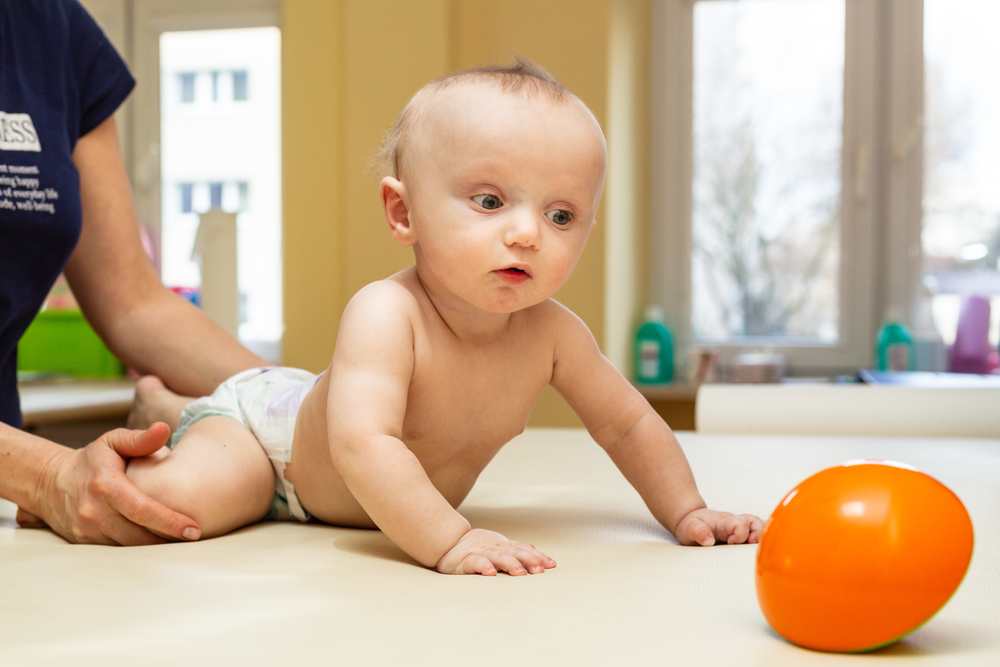
Rolling Over | Moving from tummy to back or back to tummy using core and arm muscles. |
| Sitting Up | Developing the strength to hold their head up and sit independently for short periods. | |
| Toddlers
(1–2 years) |
Walking and Running | Taking unassisted, stumbling, or running with less control. |
| Climbing and Squatting | Pulling up on furniture, climbing low objects, and squatting to pick up toys. | |
| Preschoolers
(3–5 years) |
Hopping and Balancing | Hopping on one foot and balancing briefly. |
| Riding a Tricycle | Riding a tricycle shows coordinated leg and trunk movements. | |
| Early School Age
(5+ years) |
Jumping and Skipping | Jumping with both feet together, jumping over objects, and starting to skip. |
| Ball Skills | Throwing overhand, catching a bounced ball, and kicking accurately. |
Fine motor skills build on these to become the hand-eye coordination that allows us to grip a pencil, tie our shoes, and use utensils. Gross motor skills develop in a specific order, with foundational whole-body movements supporting more complex physical skills needed for an active life in Wicker Park.
The brain governs sensory processing and the development of gross motor skills. Gross motor skills then determine the development of fine motor skills, alongside speech.
Motor control involves multiple areas of the brain working together. The cerebrum plays a key role in planning and initiating movement, while structures such as the basal ganglia and cerebellum help regulate timing, coordination, and efficiency.
The motor cortex sends signals to the body to produce voluntary movement, and the brainstem and spinal pathways support posture, balance, and automatic responses that make movement smooth and effective.
One way to understand gross motor skills and coordination in toddlers is to look at what happens when a child tries to catch a ball.
Missing the ball does not mean that the child has weak muscles or a neurological condition. It often reflects that one or more systems involved in movement are still developing, such timing, coordination, motor planning, or sensory processing.
The difference between fine and gross motor skills is that gross involves large muscle groups, while fine involves small muscle groups. Gross motor skills generally develop before fine motor skills, providing the postural stability and coordination children need for more precise movements. Differences in areas such as core strength, balance, or muscle tone may influence how easily these skills develop and impact young Wicker Park residents and their motor skills.
Because gross motor skills support overall posture and stability, challenges in this area may sometimes be seen alongside difficulties with activities such as speech or feeding. Speech and eating involve coordinated fine oral-motor control of the tongue, lips, and jaw. These skills rely on stable posture and ongoing sensory-motor feedback. When the body is working hard to maintain balance or positioning, these higher-level skills can require additional effort.
Think of your child’s body like a tree. The core functions as the trunk, providing stability for the branches, including the head, arms, and legs. Gross motor skills like crawling, jumping, or balancing build the core strength needed for control. Kids may lean on walls, use furniture for support, or appear fatigued during play because maintaining posture requires increased effort.
In our active Wicker Park neighborhood, gross motor skills are bridges to social skills. Some children may choose to limit participation when movement feels difficult or tiring. These children may retreat from play, not due to lack of interest, but because their bodies are working harder to keep up. Supporting core strength and postural control can help children participate more comfortably in physical play and social activities.
Children often engage more freely with peers when they are physically confident. Addressing these foundational skills early can support greater ease in movement, which in turn may encourage participation, communication, and social interaction over time.
Muscle tone refers to the resting tension in a muscle and how prepared it is to activate during movement. Children with lower muscle tone, or hypotonia, may need to use more effort to generate the strength they need for activities like standing, climbing, or throwing a ball.
Differences in muscle tone have been observed in children with a range of developmental profiles, including some children on the autism spectrum, and can influence gross motor skill development.
Children with higher muscle tone, or hypertonia, may experience stiffness or restrictive movements that make walking, sitting, or transitioning between positions more challenging. Multidisciplinary physical programs may improve gross motor skills across a range of different muscle tones.
The vestibular system controls the balance we need to use our gross motor capabilities. Located in our inner ear, it helps the body understand head position and movement in space. This system allows us to walk without falling, turn our head without getting dizzy, and navigate the uneven terrain of a park safely. These are all key components of gross motor skills for socialising in Wicker Park.
Using special sensory therapies focused on this system can help kids improve their gross motor skills and sensory processing. Therapies may use swings, spinning, or tilting to activate the vestibular system and train the brain to process motion and gravity signals.
Proprioception is the body’s ability to sense where it is in space and how much force to use during movements. This system helps children learn to control their movements in relation to the environment. When proprioception is under-responsive, children might seek additional information by crashing into furniture, using excessive force, or appearing unusually active.
Over-responsive children feel proprioceptive input too strongly and are overly cautious or avoidant of activities centered on gross motor movements, like stepping off curbs or navigating obstacles.
Differences in proprioceptive processing can influence coordination and confidence during movement, particularly as children learn new motor skills. These patterns are common in early development and can change as the nervous system matures and with appropriate support.
Developmental windows describe the typical age ranges during which children acquire gross motor skills. These timeframes help clinicians and parents understand when skills commonly emerge and when additional support may be helpful for navigating gross motor skills for Wicker park children. Here is the sequence of the six universal gross motor milestones and their windows:
| Milestone | Window of Achievement | Key Insight |
| Sitting Without Support | 3 – 9 months | Developing core strength supports upright posture while vestibular input, muscle tone, and proprioception work together to help maintain balance. |
| Standing with Assistance | 4 – 11 months | Weight-bearing through the legs is supported by emerging core stability, muscle tone, vestibular input for head control, and proprioceptive feedback from joints and muscles. |
| Hands-and-Knees Crawling | 5 – 13 months | Shoulder and core stability support movement while coordination, balance, proprioception, and muscle tone help manage weight shifts and alternating limb patterns. |
| Walking with Assistance | 5 – 13 months | Early stepping is supported by developing core and hip strength, vestibular input for balance during movement, and proprioception for foot placement. |
| Standing Alone | 6 – 16 months | Increasing postural control allows children to maintain upright balance with support from vestibular input, muscle tone, and proprioceptive awareness. |
| Walking Alone | 8 – 17 months | Independent walking relies on developing balance, coordination, proprioception, and endurance as movement patterns become more consistent. |
Approximately 90% of children follow the same order of sitting, standing, and then walking. These windows act as checkpoints. If your child has not reached a milestone by the end of its window, or seems to be struggling to progress through them, go for a screening by a professional who understands the gross motor skills Wicker Park kids need for school readiness.
Ready to turn your living room into a space that supports movement and play? You don’t need special equipment to help your child practice gross motor skills, and play-based activities can be an enjoyable way to build strength, coordination, and confidence together. Here are some play-based exercises that improve gross motor manipulative skills:
Many children engage more readily with movement when it feels playful rather than structured. Pretending to be an animal is a commonly used activity in occupational and physical therapy. Animal walks are excellent for supporting shoulder strength, core stability, and coordination in a fun, approachable way. Two favorites include:
These movements teach the body to coordinate the upper and lower halves to improve gross motor coordination. You can move on to specific activities that help regulate their stimulation levels once your child has built some stability.
High levels of movement and restlessness often reflect sensory overload rather than intentional misbehaviour. If your child seems agitated or is crashing into things, they may need heavy work to calm down their sensory system. Here is a fun example of heavy work:
This type of input may help some children feel more organized and settled in their bodies, making it easier to transition into other movements or learning activities.
Crossing the midline refers to the ability to reach across the center of the body to complete a task. This skill supports coordination between both sides of the body and is commonly addressed during early motor development. Here are two games commonly used to train the brain connection:
These games force the eyes and hands to cross the midline, supporting bilateral coordination. You can combine these physical skills with cognitive challenges, with the ability to follow directions in one big obstacle course.
A pile of household items can offer meaningful practice for following directions. Set up a simple course using pillows and tables to challenge praxis, which is the ability to conceive and execute a plan. Here is how to explain the activity once you have a simple course set up:
At-home obstacle courses improve motor planning by challenging kids to ideate, plan, and execute new movement sequences in a fun way. These home exercises are powerful and are a great support for professional therapies.
You know your child, and research confirms that the earlier you get assistance, the better the outcomes. Giving us a call is also best if you see your child withdrawing, looking tired, or missing any of the developmental windows. We are here to support you and your child’s journey.
Parenting comes with many questions, especially when it comes to your child’s development. Understanding how gross motor skills support movement, participation, and daily routines can help you recognize when additional guidance may be beneficial.
If you have concerns about your child’s strength, coordination, or ability to keep up during play, professional support can provide clarity and direction. Chicago Pediatric Therapy & Wellness Center offers comprehensive developmental screenings and coordinated care to help families understand their child’s needs and next steps.
Contact us today to schedule a screening at our clinic in Wicker Park, and learn how our team can support your child’s growth and development.
Take the first step towards supporting your child's development.
Cara Lucas
 Nathalie Deutsch
 Patrick McLean
Owner
Patrick McLean
Owner
Our expert team is here to help. Schedule a consultation today.