
Pairing in ABA Therapy: How Chicago Therapists Build Rapport Before Teaching Begins
Recent CDC prevalence data show that about one in 31 children in the United States now has autism.…




Get in touch with Rose
Rose McLean, PT, DPT, c/NDT, is co-owner and lead physical therapist at Chicago Pediatric Therapy & Wellness Center, where she has dedicated over 20 years to helping children with developmental challenges achieve their movement goals. Rose's specialized focus on pediatric physical therapy, combined with her commitment to multidisciplinary collaboration, has made her a trusted resource for families navigating motor delays, neurological conditions, and complex developmental needs throughout Chicago. Rose earned her Doctorate in Physical Therapy from Northwestern University in Chicago in 2004, where she received rigorous training in both pediatric and neurological rehabilitation. She began her clinical career at Cincinnati Children's Hospital, consistently ranked among America's top pediatric medical centers, where she gained invaluable experience treating children with diverse and medically complex conditions. This foundation shaped her evidence-based, child-centered approach to therapy. Beyond her doctoral training, Rose holds certification in Neurodevelopmental Treatment (NDT), a specialized intervention approach for children with cerebral palsy, neurological impairments, and other developmental disorders. She also maintains registration with Illinois' Early Intervention Program, allowing her to provide services to infants and toddlers (birth to age 3) in both home and clinic settings. Rose's therapeutic style is distinctively playful and highly individualized. She invests time in understanding each child's personality, interests, and motivators, then designs sessions that feel like play while targeting specific developmental goals. Whether working on strength, balance, coordination, or motor planning, Rose ensures therapy remains engaging and appropriately challenging. In 2014, Rose partnered with her husband Patrick to establish Chicago Pediatric Therapy & Wellness Center, driven by a vision that pediatric therapy should be comprehensive, collaborative, and convenient. She wanted to eliminate the fragmentation families often experience when their child needs multiple therapies—instead offering coordinated care where physical therapists, occupational therapists, speech-language pathologists, behavior analysts, and social workers communicate regularly about each child's progress. Rose also prioritized creating community spaces where families can connect and children can learn social skills alongside therapeutic development.
Read Less →With a background in early childhood special education, I have spent so much time studying about disabilities and diagnoses. However, the most invaluable lessons that allow me to effectively support caregivers and their children with developmental differences always come from the parents of these amazing children. Since World Down Syndrome Day is quickly approaching (March 21st), I would like to share with you some insights I have gained from a mother whose daughter has Down syndrome.
Margarita tactfully follows her one-year-old daughter, 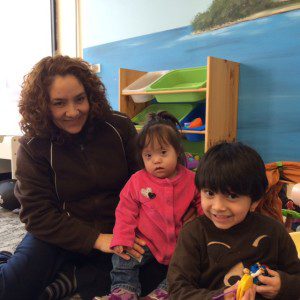 Stephanie, as she is climbing up the slide at GiGi’s Playhouse Chicago. As soon as Stephanie goes down the slide while holding her mother’s hands, both of them share delight in being with each other. “Stephanie has improved a lot physically and developmentally,” added Margarita, a firm believer in the Early Intervention program. The family sees a developmental therapist and comes to GiGi’s weekly playgroup to meet other friends on Wednesdays. Margarita loves the way being Stephanie’s mother has opened her mind. She wants to tell other parents of children with Down syndrome to expect the unexpected. “You will never know what your child will be able to do. Don’t be pessimistic,” said Margarita. Stephanie’s older brother, Aldo, quickly added, “She always messes up my room but she is my sister.”
Stephanie spots her favorite bin that contains musical instruments and looks at Margarita before going off on another bout of independent exploration. She keeps looking back at her mother for a warm smile of support. Margarita and I talk about her experience as a mother and the ways she takes care of herself. Oftentimes, therapists focus much of their commitment on the child and leave the caregivers on the sideline; so, playgroups are wonderful for parents to share their experiences with other parents while learning about their child’s development. Amy Archer, the director of GiGi’s Playhouse, loves “watching how parents connect with one another, share resources and tips from parenting to equipment.” I must say that playgroups are the quintessence of community building.
Running these playgroups with other therapists from the Chicago Pediatric Therapy & Wellness Center has given me a deeper appreciation for the love and bonds that these families have with each other. We feel humbled when we see parents connect with one another while helping their children achieve goals and participate fully in the community. “Parents set high expectations of what their children can do. This is one reason I love being at GiGi’s,” remarked Amy.
For this year’s World Down Syndrome day, let’s celebrate the similarities we all share, despite the number of chromosomes we have. Be sure to visit GiGi’s Playhouse on Wednesdays to join us for the playgroup packed full of fun, crafts and games. You can also receive information at the Chicago Pediatric Therapy & Wellness Center as well as GiGi’s Playhouse for special events, ongoing playgroups and specialized pediatric services.
Take the first step towards supporting your child's development.
Cara Lucas
 Nathalie Deutsch

 Patrick McLean
Owner
Patrick McLean
Owner
Our expert team is here to help. Schedule a consultation today.