
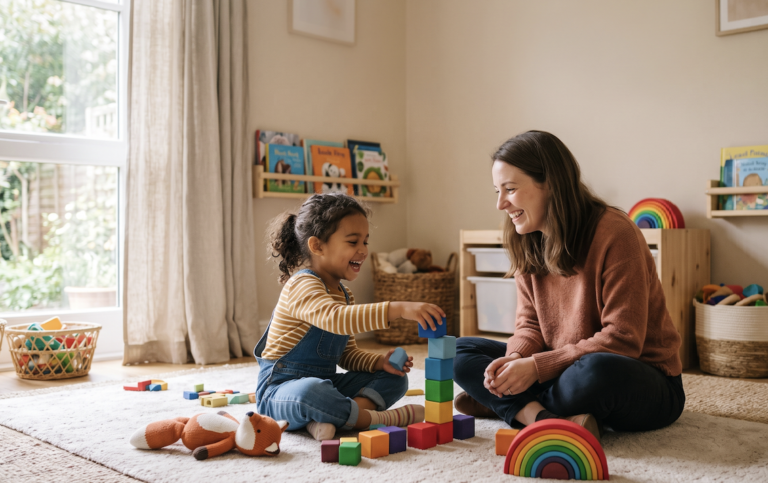
Pairing in ABA Therapy: How Chicago Therapists Build Rapport Before Teaching Begins
Recent CDC prevalence data show that about one in 31 children in the United States now has autism.…



Get in touch with Rose
Rose McLean, PT, DPT, c/NDT, is co-owner and lead physical therapist at Chicago Pediatric Therapy & Wellness Center, where she has dedicated over 20 years to helping children with developmental challenges achieve their movement goals. Rose's specialized focus on pediatric physical therapy, combined with her commitment to multidisciplinary collaboration, has made her a trusted resource for families navigating motor delays, neurological conditions, and complex developmental needs throughout Chicago. Rose earned her Doctorate in Physical Therapy from Northwestern University in Chicago in 2004, where she received rigorous training in both pediatric and neurological rehabilitation. She began her clinical career at Cincinnati Children's Hospital, consistently ranked among America's top pediatric medical centers, where she gained invaluable experience treating children with diverse and medically complex conditions. This foundation shaped her evidence-based, child-centered approach to therapy. Beyond her doctoral training, Rose holds certification in Neurodevelopmental Treatment (NDT), a specialized intervention approach for children with cerebral palsy, neurological impairments, and other developmental disorders. She also maintains registration with Illinois' Early Intervention Program, allowing her to provide services to infants and toddlers (birth to age 3) in both home and clinic settings. Rose's therapeutic style is distinctively playful and highly individualized. She invests time in understanding each child's personality, interests, and motivators, then designs sessions that feel like play while targeting specific developmental goals. Whether working on strength, balance, coordination, or motor planning, Rose ensures therapy remains engaging and appropriately challenging. In 2014, Rose partnered with her husband Patrick to establish Chicago Pediatric Therapy & Wellness Center, driven by a vision that pediatric therapy should be comprehensive, collaborative, and convenient. She wanted to eliminate the fragmentation families often experience when their child needs multiple therapies—instead offering coordinated care where physical therapists, occupational therapists, speech-language pathologists, behavior analysts, and social workers communicate regularly about each child's progress. Rose also prioritized creating community spaces where families can connect and children can learn social skills alongside therapeutic development.
Read Less →Can you believe that scholars and researchers used to believe that babies were born with no mind as if they were blank slates? Many parents back then were perplexed by such conclusion, if not accusation. We see how capable our children are each minute we spend time with them. In fact, infant brains go through a noticeable change every two weeks! This article will shed light on how essential your everyday parenting is. That is, it is more than keeping your babies dry, fed, and comfortable because each interaction strengthens and shapes your babies’ brain.
Baby’s brain does not come ready to go. Baby’s brain come ready to learn. It needs all the stimulation it can get to grow stronger. Most of the brain cells babies need to develop are there when they were born; however, what is lacking is the connections among the brain cells (also known as neurons). The connection is important because we want all parts of the brain to work together seamlessly. Think left and right brain. If they are not well-connected or integrate, we might end up being too logical (left brain’s expertise) to put things in context (right brain’s specialty) and understand the situation fully and see the bigger picture. As a result, from birth to three years old, the main job of a baby’s brain is connecting, connecting, and connecting.
What helps the brain cells connect or wire together is the experiences babies receive from their environment. Guess what… most of the experiences come from you! When you speak to your child, sing to her, comfort her, and so on, she learns about the world from her strong and loving relationship with you. For instance, for your child, being comforted over and over again when she is distressed, her brain will make a connection between mom/dad and a sense of comfort and love. This is how positive attachment relationship grows. In short, what you do is going to shape the growth and physical structure of your children’s brain.
Happy Playing!
Take the first step towards supporting your child's development.
Cara Lucas
 Nathalie Deutsch

 Patrick McLean
Owner
Patrick McLean
Owner
Our expert team is here to help. Schedule a consultation today.