
How to Get Your Child Jumping
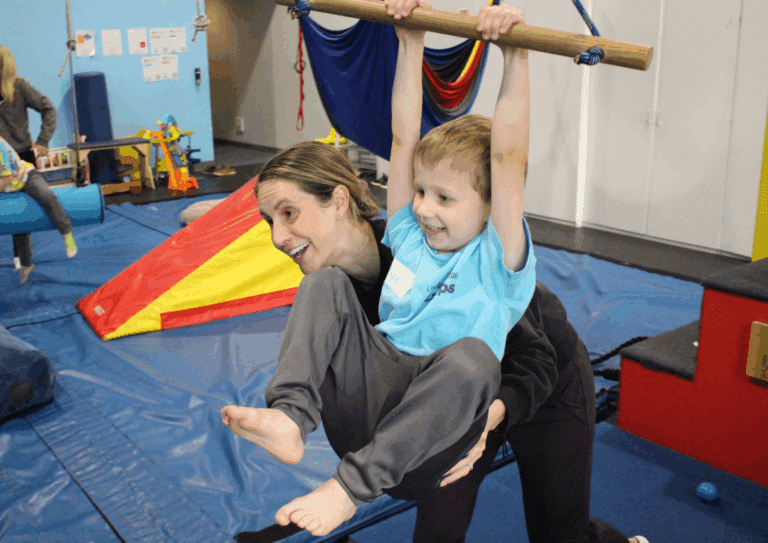
Walking, running and jumping are the building blocks to gross motor play. Most children learn to jump approximately…




Get in touch with Rose
Rose McLean, PT, DPT, c/NDT, is co-owner and lead physical therapist at Chicago Pediatric Therapy & Wellness Center, where she has dedicated over 20 years to helping children with developmental challenges achieve their movement goals. Rose's specialized focus on pediatric physical therapy, combined with her commitment to multidisciplinary collaboration, has made her a trusted resource for families navigating motor delays, neurological conditions, and complex developmental needs throughout Chicago. Rose earned her Doctorate in Physical Therapy from Northwestern University in Chicago in 2004, where she received rigorous training in both pediatric and neurological rehabilitation. She began her clinical career at Cincinnati Children's Hospital, consistently ranked among America's top pediatric medical centers, where she gained invaluable experience treating children with diverse and medically complex conditions. This foundation shaped her evidence-based, child-centered approach to therapy. Beyond her doctoral training, Rose holds certification in Neurodevelopmental Treatment (NDT), a specialized intervention approach for children with cerebral palsy, neurological impairments, and other developmental disorders. She also maintains registration with Illinois' Early Intervention Program, allowing her to provide services to infants and toddlers (birth to age 3) in both home and clinic settings. Rose's therapeutic style is distinctively playful and highly individualized. She invests time in understanding each child's personality, interests, and motivators, then designs sessions that feel like play while targeting specific developmental goals. Whether working on strength, balance, coordination, or motor planning, Rose ensures therapy remains engaging and appropriately challenging. In 2014, Rose partnered with her husband Patrick to establish Chicago Pediatric Therapy & Wellness Center, driven by a vision that pediatric therapy should be comprehensive, collaborative, and convenient. She wanted to eliminate the fragmentation families often experience when their child needs multiple therapies—instead offering coordinated care where physical therapists, occupational therapists, speech-language pathologists, behavior analysts, and social workers communicate regularly about each child's progress. Rose also prioritized creating community spaces where families can connect and children can learn social skills alongside therapeutic development.
Read Less →As a parent, hearing that your baby can benefit from helmet therapy may seem scary. This is an intervention used more and more often for young children who were born with or have developed an asymmetrical head shape as an infant. Just as older children may need braces to fix their teeth, a baby may need a helmet to help fix their head shape.

While there is a possibility your baby’s head shape can improve with repositioning and therapy, this is not a guarantee. Either way, it is important to address, as abnormal head shape can lead to increased issues such as motor delays, vision issues, balance problems and facial asymmetry.
Unfortunately, getting a helmet is a time sensitive matter. Helmet therapy is only effective in correcting head shape from 3-18 months. The helmet works along with brain and skull growth to reshape the head as it grows. It does not press on the skull, but rather, blocks an area from growing more, while allowing a concavity in other areas for the skull to grow and fill into.
A younger baby has faster head growth between the ages of 4-6 months and may not need to wear a helmet as long if fitted at this time. An older child would need to wear a helmet longer because of slower growth of the head and skull to reshape.
The average length of helmet therapy is 3 months, however, the duration of the helmet therapy will depend on your baby’s growth and the severity of their starting point. Babies are incredibly resilient and adjust to wearing a helmet 23 hours a day. If they are uncomfortable, it is likely not a good fit and needs readjustments. 23 hours a day sounds like a very long to participate in therapy, but the more you adhere to it, the faster your baby’s head will change shape.

Once you decide to participate in helmet therapy it is important to still participate in repositioning your baby. Repositioning is when you change the side you lay your baby’s head on in the crib or changing table. It’s also working on sitting, tummy time, and side lying. If your baby has had a flat spot on their head, it may be because they have a strong preference to always lay in one position.
They spent a lot of time consistently putting pressure in one area creating a flat spot, so repositioning your baby during helmet therapy will teach them how to move out of that preferred position. Repositioning may also help stretch and lengthen the muscles that may have become tight from laying in that preferred position too.
Repositioning and therapeutic exercises additionally help developing babies learn to use both sides of their bodies as their senses and motor control develop. This includes rolling, tummy time strength, hand use and visual symmetry.

Should you have any more questions regarding helmet therapy or have more concerns about your baby’s head shape and gross motor skills, reach out to our skilled, pediatric physical therapists at Chicago Pediatric Therapy & Wellness Center at 773-687-9241. Our experts can guide you through the process of getting a helmet, while giving you and your baby appropriate exercises to strengthen muscles around the neck and face to promote symmetry.
Take the first step towards supporting your child's development.
Patrick McLean
Owner
 Patrick McLean
Owner
Patrick McLean
Owner
 Rose McLean
Our expert team is here to help. Schedule a consultation today.