

How to Get Your Child Jumping
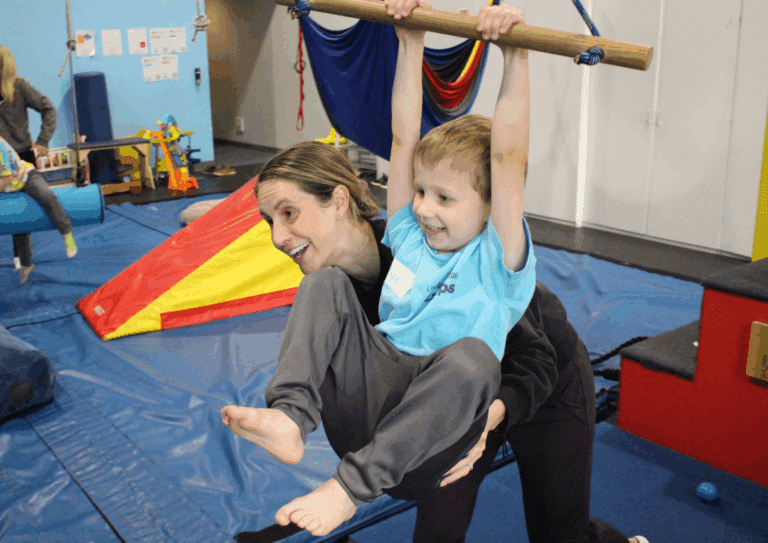
Walking, running and jumping are the building blocks to gross motor play. Most children learn to jump approximately…




Get in touch with Rose
Rose McLean, PT, DPT, c/NDT, is co-owner and lead physical therapist at Chicago Pediatric Therapy & Wellness Center, where she has dedicated over 20 years to helping children with developmental challenges achieve their movement goals. Rose's specialized focus on pediatric physical therapy, combined with her commitment to multidisciplinary collaboration, has made her a trusted resource for families navigating motor delays, neurological conditions, and complex developmental needs throughout Chicago. Rose earned her Doctorate in Physical Therapy from Northwestern University in Chicago in 2004, where she received rigorous training in both pediatric and neurological rehabilitation. She began her clinical career at Cincinnati Children's Hospital, consistently ranked among America's top pediatric medical centers, where she gained invaluable experience treating children with diverse and medically complex conditions. This foundation shaped her evidence-based, child-centered approach to therapy. Beyond her doctoral training, Rose holds certification in Neurodevelopmental Treatment (NDT), a specialized intervention approach for children with cerebral palsy, neurological impairments, and other developmental disorders. She also maintains registration with Illinois' Early Intervention Program, allowing her to provide services to infants and toddlers (birth to age 3) in both home and clinic settings. Rose's therapeutic style is distinctively playful and highly individualized. She invests time in understanding each child's personality, interests, and motivators, then designs sessions that feel like play while targeting specific developmental goals. Whether working on strength, balance, coordination, or motor planning, Rose ensures therapy remains engaging and appropriately challenging. In 2014, Rose partnered with her husband Patrick to establish Chicago Pediatric Therapy & Wellness Center, driven by a vision that pediatric therapy should be comprehensive, collaborative, and convenient. She wanted to eliminate the fragmentation families often experience when their child needs multiple therapies—instead offering coordinated care where physical therapists, occupational therapists, speech-language pathologists, behavior analysts, and social workers communicate regularly about each child's progress. Rose also prioritized creating community spaces where families can connect and children can learn social skills alongside therapeutic development.
Read Less →Having bowel movements is an important activity that most people do every day without giving it much thought or attention. However, sometimes we must pay extra attention to our children’s bowel movements to ensure that the bowels are functioning as they should. When kids stop going #2 regularly, it can negatively impact their physical and emotional health. It is crucial that parents identify when their child is experiencing constipation so that they can intervene in an effective and timely manner.
Is my child constipated?
Occasional constipation is normal and happens to everyone from time to time. It can be caused by travel, change in diet, illness, dehydration or medication side effects. Occasional constipation is marked by less frequent bowel movements, straining when pushing, and bowel movements that are solid, large, dark, and have cracks.
Most often, occasional constipation is resolved through lifestyle changes. With the following natural remedies, constipation should resolve within 1-2 weeks:
If the frequency, ease of pushing, and appearance of your child’s bowel movements does not return to normal within two weeks, it is crucial to explore additional interventions so that the constipation does not become more severe. If not treated, occasional constipation can lead to functional constipation, which is more serious and requires intervention.
What is functional constipation?
When kids have painful bowel movements, they avoid going potty which is more commonly referred to as “withholding bowel movements.” When kids withhold, the stool becomes more dry, more solid, and larger. This makes it even harder and more painful to push out when attempting to void. Therefore, the child continues to avoid going potty. Eventually, the intestines will stretch and the child will be unable to detect that they need to go! This will lead to unconsciously leaking stool or having bowel accidents in their underwear.
Functional constipation is marked by:
What are the effects of constipation on my child’s functioning?
Constipation can impact mood and a child’s ability to manage emotions. It may contribute to bladder accidents and bedwetting frequency. It can also lead to smears of fecal matter in underwear. Frequently, constipation can lead to a decreased appetite and overall poor self esteem. Left untreated, it can lead to impaction in the intestines.
What can I do to resolve my child’s constipation?
Consult your child’s pediatrician, occupational or physical therapist for more information about specific interventions to resolve constipation. They may recommend a combination of the following strategies:
Quick toileting tips:
Position feet on a stool –> This helps a child feel secure on the toilet.
Lean forward slightly at the hips –> This sets the child up in the ideal position for pushing.
2. Eliminate urinate first before attempting to have bowel movement.
3. Implement a schedule in which child sits on toilet after eating, when the body is most ready to eliminate.
If your child is having difficulty with constipation, the team of therapists at Chicago Pediatric Therapy and Wellness Center are here to support you and your child in resolving your child’s toileting challenges.
Take the first step towards supporting your child's development.
Patrick McLean
Owner
 Patrick McLean
Owner
Patrick McLean
Owner
 Rose McLean
Our expert team is here to help. Schedule a consultation today.