

How to Get Your Child Jumping
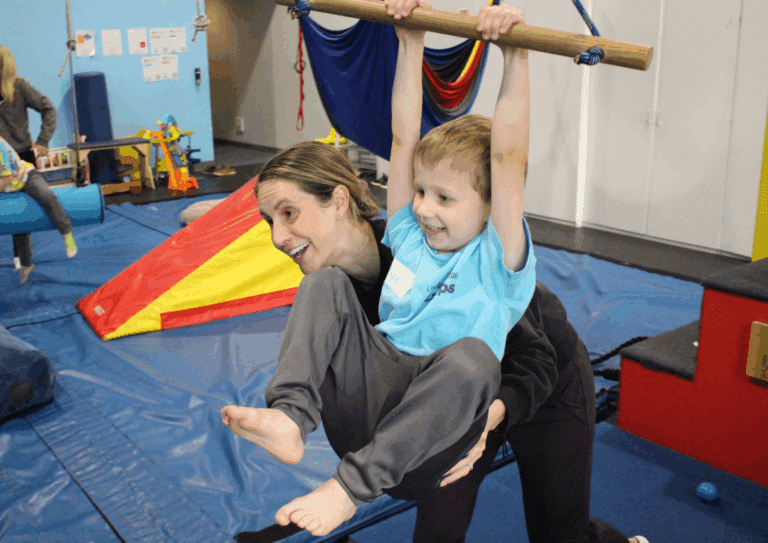
Walking, running and jumping are the building blocks to gross motor play. Most children learn to jump approximately…




Get in touch with Rose
Rose McLean, PT, DPT, c/NDT, is co-owner and lead physical therapist at Chicago Pediatric Therapy & Wellness Center, where she has dedicated over 20 years to helping children with developmental challenges achieve their movement goals. Rose's specialized focus on pediatric physical therapy, combined with her commitment to multidisciplinary collaboration, has made her a trusted resource for families navigating motor delays, neurological conditions, and complex developmental needs throughout Chicago. Rose earned her Doctorate in Physical Therapy from Northwestern University in Chicago in 2004, where she received rigorous training in both pediatric and neurological rehabilitation. She began her clinical career at Cincinnati Children's Hospital, consistently ranked among America's top pediatric medical centers, where she gained invaluable experience treating children with diverse and medically complex conditions. This foundation shaped her evidence-based, child-centered approach to therapy. Beyond her doctoral training, Rose holds certification in Neurodevelopmental Treatment (NDT), a specialized intervention approach for children with cerebral palsy, neurological impairments, and other developmental disorders. She also maintains registration with Illinois' Early Intervention Program, allowing her to provide services to infants and toddlers (birth to age 3) in both home and clinic settings. Rose's therapeutic style is distinctively playful and highly individualized. She invests time in understanding each child's personality, interests, and motivators, then designs sessions that feel like play while targeting specific developmental goals. Whether working on strength, balance, coordination, or motor planning, Rose ensures therapy remains engaging and appropriately challenging. In 2014, Rose partnered with her husband Patrick to establish Chicago Pediatric Therapy & Wellness Center, driven by a vision that pediatric therapy should be comprehensive, collaborative, and convenient. She wanted to eliminate the fragmentation families often experience when their child needs multiple therapies—instead offering coordinated care where physical therapists, occupational therapists, speech-language pathologists, behavior analysts, and social workers communicate regularly about each child's progress. Rose also prioritized creating community spaces where families can connect and children can learn social skills alongside therapeutic development.
Read Less →
Potty Training can be a stressful, yet exciting experience for both the child and the caregiver. It is a period of time where your child is exploring a new level of independence! But, how do you know that your child (and your family) is ready to start Potty Training?
Amanda DiGangi from Chicago Pediatric Therapy & Wellness Center is a board-certified in pediatric physical therapist trained in pediatric pelvic health and she is here to help! She’s put together 9 signs that your child is ready for toilet training to help you and your family decide if it is time to embark on this Potty Training journey.
With her background in pediatric pelvic health physical therapy, she provides a unique approach to this topic to encourage healthy toileting from an early age.
Here are the NINE benchmarks you may want to consider before attempting to start Potty Training your child:
 18 months of age or older
 Aware of when they’re going to the bathroom
 Dry diaper for 2 hours at a time
 Dry diaper after naptime
  No longer having bowel movements at night
 Regular or predictable bowel movements
 Ability to play in a deep squat position
 Ability to help with the process such as pulling pants down
 Emotional readiness of the child and caregiver
Convinced your child is ready? Awesome, we can’t wait to hear about your successes on our social media! Still nervous to get started? That is okay too! As mentioned, success relies on a team approach and readiness from all caregivers. If work is busy, your child’s schedule is atypical that weekend, or you plain need a break, just wait.
Find a time that works best for you and your family. If you’ve read these 9 signs and would like more information, check out our blog – Putting The PT in Potty Training or check us out on our Facebook and Instagram page
If you feel your child is still not physically ready to potty train but would like some direct guidance to get started, please contact our office at 773-687-9241 to schedule a pediatric pelvic health physical therapy evaluation at Chicago Pediatric Therapy & Wellness Center.
Take the first step towards supporting your child's development.
Patrick McLean
Owner
 Patrick McLean
Owner
Patrick McLean
Owner
 Rose McLean
Our expert team is here to help. Schedule a consultation today.