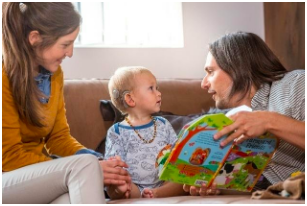



Babies can start learning to sit as young as 3 months old. However, before you start working on sitting, it is important that your baby has the foundations of tummy time down. Tummy time is important because it gives your baby the opportunity to strengthen their neck, stomach, and back muscles, all crucial muscles that are required to keep you upright in sitting!
Once these muscles are strong, you will be able to place your baby in sitting, as they will be able to hold their head up on their own. Placing your baby in sitting devices is not recommended due to the position these devices hold their hips and pelvis in.
How do I to teach my baby to sit?
Once your baby is able to hold their head upright, you can start sitting them in supported corners of the couch or in a u-shaped pillow with close supervision. This is their first introduction to being able to balance. You can help them with this skill by bringing their hands forward in front of them and having them learn to prop sit. When a baby prop sits, they sit on their bottom and start to bear weight through their arms.
As your baby begins to have more experiences here, you will notice that they may begin to sit independently, without using their arms for balance. At first, it will only be for a few moments and then their postural muscles will gain endurance and they will be able to sit for longer periods of time. By 6-7 months you should notice that your baby is sitting independently and is able to free their hands to play with and manipulate toys while maintaining their balance.
A great way to have your baby practice sitting is in front of a motivating toy like the mirror or, even better, someone to interact with. Having toys or motivating caregivers a little above them will motivate your child to look up, which strengthens their back and neck muscles.
You can surround your baby with a pillow so that if they begin to lose balance, they will fall on a soft surface and can eventually use this pillow surface to push themselves back up. You can practice baby sit ups with them in order to work on their core muscles by pulling them up from laying on their back on their pillow into sitting.
Try to give your fingers for them to hold onto and pull themselves up, rather than pulling at their arms. You also want to look for them tucking their chin and pulling with their arms in order to get back up to sitting.

My baby is sitting, now what?
Once your baby learns to sit you should start to see them sitting with variety. Sometimes their legs may be straight or curved in a ring or you may see them side sit occasionally. Observing this sitting variety is a result of your baby being able to weight shift, which is key step to learn how to get into and out of sitting on their own. With this increased variety of balanced sitting postures, your baby may begin to reach across their body for toys just outside of their reach.
This move also helps progress them towards getting out of sitting on their own. By the time your child is 7 months, they should be sitting independently and playing with toys with ease while keeping their balance and an upright posture.
Ok, so now they’re sitting…enjoy your last few weeks of knowing where your baby is at all times! Next up: Crawling! Babies start crawling anywhere between 6-10 months of age, and time flies from there! If you have tried some of these simple sitting solutions and your little love isn’t quite there yet, it may be time to contact a pediatric physical therapist for an evaluation.
Reach out to our developmental experts to get some specific coaching programs for your child to get them balanced and moving! Our pediatric physical therapists from Chicago Pediatric Therapy & Wellness Center can be reached at 773-687-9241.