Generalization in ABA Therapy: How Lakeview Kids Learn to Use New Skills in Real Life
Important Note for Families: This information is for educational purposes only and does not constitute medical advice, diagnosis,…


Get in touch with Rose
Rose McLean, PT, DPT, c/NDT, is co-owner and lead physical therapist at Chicago Pediatric Therapy & Wellness Center, where she has dedicated over 20 years to helping children with developmental challenges achieve their movement goals. Rose's specialized focus on pediatric physical therapy, combined with her commitment to multidisciplinary collaboration, has made her a trusted resource for families navigating motor delays, neurological conditions, and complex developmental needs throughout Chicago. Rose earned her Doctorate in Physical Therapy from Northwestern University in Chicago in 2004, where she received rigorous training in both pediatric and neurological rehabilitation. She began her clinical career at Cincinnati Children's Hospital, consistently ranked among America's top pediatric medical centers, where she gained invaluable experience treating children with diverse and medically complex conditions. This foundation shaped her evidence-based, child-centered approach to therapy. Beyond her doctoral training, Rose holds certification in Neurodevelopmental Treatment (NDT), a specialized intervention approach for children with cerebral palsy, neurological impairments, and other developmental disorders. She also maintains registration with Illinois' Early Intervention Program, allowing her to provide services to infants and toddlers (birth to age 3) in both home and clinic settings. Rose's therapeutic style is distinctively playful and highly individualized. She invests time in understanding each child's personality, interests, and motivators, then designs sessions that feel like play while targeting specific developmental goals. Whether working on strength, balance, coordination, or motor planning, Rose ensures therapy remains engaging and appropriately challenging. In 2014, Rose partnered with her husband Patrick to establish Chicago Pediatric Therapy & Wellness Center, driven by a vision that pediatric therapy should be comprehensive, collaborative, and convenient. She wanted to eliminate the fragmentation families often experience when their child needs multiple therapies—instead offering coordinated care where physical therapists, occupational therapists, speech-language pathologists, behavior analysts, and social workers communicate regularly about each child's progress. Rose also prioritized creating community spaces where families can connect and children can learn social skills alongside therapeutic development.
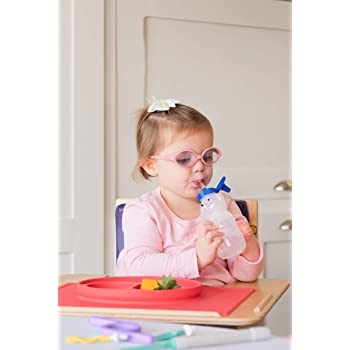
Read Less →Straw drinking is an important developmental milestone for a toddler to achieve. It strengthens tongue, cheek, and lip muscles that aid in more sophisticated eating and drinking skills. However, sometimes bringing a child’s attention and focus to the use of a straw can be more of an obstacle than families initially anticipate. Luckily, an adapted straw cup called the Honey Bear Cup can ease children’s exposure to the use of a straw.

The Honey Bear Cup was originally created for children who did not have the fundamental musculature needed to suck liquid from a straw. The concept behind the cup is simple. The parent or caregiver is initiating the “work” by squeezing the soft base of the cup, which pulls liquid into the straw.
In its most basic description and therapeutic intervention level, the Honey Bear Cup teaches the child that liquid can come from the straw and into their mouth.
If you are attempting to start teaching your child straw drinking on a conventional straw cup, but are unsuccessful consider using the Honey Bear Cup. The following can be referenced as a system for gradual exposure.
Place the straw in the child’s mouth and squeeze the cup gently to let liquid from the straw travel directly to the child’s mouth. Gauge your child’s reaction to the liquid in their mouth.
At first, it may come as a shock. Try to ensure that your child is not biting on the straw. If needed, place your fingertips close to the tip of the straw. Leave only enough room for their lips to come around. Then, make sure that your child is safely swallowing the liquid before moving to the next step (I.e., no sign of coughing or spitting out the liquid).
In this step, you will begin to teach your child that if you squeeze, the liquid will come out. To do this, pair your language with your actions. For example, “Squeeze the bear’s tummy.” & “Look, here comes the milk!”. Your child has already learned that the straw can go in their mouth and they can swallow. With the Honey Bear Cup, the idea is that when they see the milk coming up the straw, they will put their mouth to it.
If they are having difficulty sucking liquid from the straw, give another little squeeze to push it out. Leave the straw in the child’s mouth until they move away from it. Some children may try to take another sip, which is what we want. At this point, you can squeeze the bear’s tummy to assist your child, or wait to see if the child tries to suck the liquid manually.
Now is the time to start to varying the amount of support you will give your child as they are drinking. You can do this by paying very close attention to how they are responding each time the cup is presented. Some children may quickly adapt to using this cup, and begin to suck liquid from the straw on their own. Others may need continued assist to bring the liquid up the straw or into the base of the cup.
It looks like a little container that is commonly used to store honey. However, this adapted cup has helped many children who have struggled in their initial exposure and experience with straw drinking. It does this by creating a safe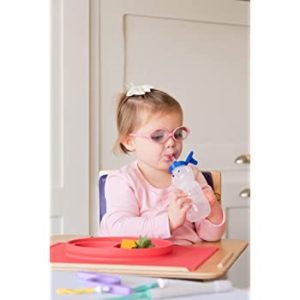 and no-fuss method to intake fluid.
Many of these processes can be modified and adapted through close observation. Weekly intervention and counsel with a speech and language pathologist can also be quite helpful.
Should you continue to have questions or concerns regarding your child’s adaptations to straws or other feeding and drinking concerns, please contact our feeding specialists for a consultation at 773-687-9241!
The Therapists at Chicago Pediatric Therapy & Wellness Center are versed in all types of difficulties with feeding and can help!
Take the first step towards supporting your child's development.
Jenna Hultgren

 Cara Lucas
 Nathalie Deutsch
Our expert team is here to help. Schedule a consultation today.