Generalization in ABA Therapy: How Lakeview Kids Learn to Use New Skills in Real Life
Important Note for Families: This information is for educational purposes only and does not constitute medical advice, diagnosis,…

Get in touch with Heather
Heather Winegard, M.S., CCC-SLP, is a certified speech-language pathologist who brings over 15 years of pediatric expertise to families at Chicago Pediatric Therapy & Wellness Center. Since joining the clinic in 2017, Heather has helped hundreds of children overcome communication barriers and feeding challenges, empowering them to express their needs, connect with others, and participate fully in daily life. Heather's educational journey began at Butler University, where she earned a Bachelor of Arts in Communication Sciences and Disorders in 2008. This undergraduate foundation sparked her passion for helping children develop the fundamental human skill of communication. She continued her training at Arizona State University, earning her Master of Science in Communication Sciences and Disorders in 2010, followed by successful completion of her Clinical Fellowship Year and ASHA certification. As a CCC-SLP (Certificate of Clinical Competence in Speech-Language Pathology), Heather has demonstrated advanced knowledge and adherence to the highest professional standards set by the American Speech-Language-Hearing Association. Her clinical practice addresses the full spectrum of pediatric communication needs, including expressive language development such as vocabulary expansion, grammar usage, and narrative skills; receptive language comprehension including following multi-step directions and understanding complex concepts; functional communication strategies for children with limited verbal abilities; articulation and phonological disorders affecting speech clarity; and feeding and swallowing disorders that impact oral motor skills and safe eating. Heather's therapy sessions are carefully individualized to match each child's developmental level, learning style, and family priorities. She collaborates closely with parents and caregivers, providing coaching and home practice activities that reinforce skills between sessions. Her ability to make therapy engaging and her commitment to celebrating every communication milestone—whether it's a first word, a clear sentence, or successful mealtime—reflect her deep understanding that communication is connection, and every child deserves to be heard.
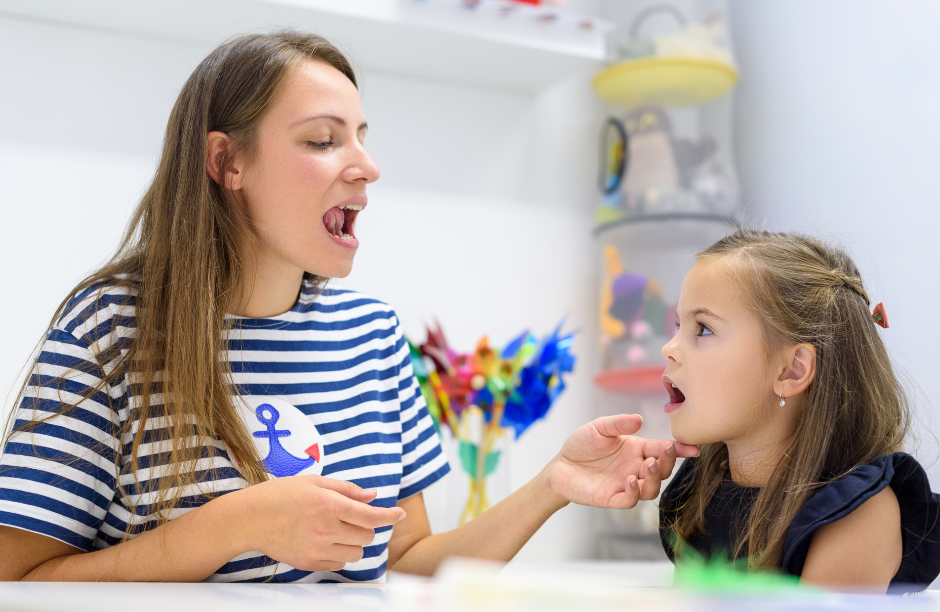
Read Less →Speech is a complex motor activity that involves the coordination of muscles in the mouth, face, and respiratory system. For some children, this coordination comes naturally. However, some children experience challenges or speech sound disorders that make speaking clearly a significant hurdle. As pediatric speech therapists, we work closely with children facing speech sound production difficulties to help make the appropriate differential diagnosis and help them find their voice and communicate with confidence.
“Speech sound disorders is an umbrella term referring to any difficulty or combination of difficulties with perception, motor production, or phonological representation of speech sounds and speech segments—including phonotactic rules governing permissible speech sound sequences in a language.
Speech sound disorders can be organic or functional in nature. Organic speech sound disorders result from an underlying motor/neurological, structural, or sensory/perceptual cause. Functional speech sound disorders are idiopathic—they have no known cause” – – ASHA
Articulation: accurate motor production of individual sounds in increasingly complex phonetic contexts (e.g., traditional articulation hierarchy) (Example sounds that are often distorted in the English language: r, s, l, to just name a few!)
Phonology: suppression of error patterns by teaching rules for how sounds are used in language (e.g., snow vs. no is an example of an error pattern called “cluster reduction”)
Motor planning refers to the brain’s ability to coordinate muscle movements needed to produce speech. When motor planning is impaired, children may struggle to sequence, coordinate, or execute the movements required for clear speech. This can manifest in various speech disorders, including:

Every child is unique, and our therapy approach is tailored to each child’s specific needs. Here’s how we typically approach these concerns:
1) Comprehensive Assessment The first step is conducting a thorough evaluation to understand the nature and severity of the child’s speech difficulties. This includes assessing oral motor function, speech sound production, and language development.
2) Individualized Treatment Plans Based on the assessment, we design customized treatment plans that address the child’s specific motor planning needs. Goals may include improving speech sound accuracy, increasing muscle strength, and enhancing overall communication.
3) Motor-Based Therapy Techniques For children with motor planning disorders, we often use motor-based therapy approaches such as:
a. Dynamic Temporal and Tactile Cueing (DTTC): A method that uses visual, verbal, and tactile cues to help children improve speech movements.
b. PROMPT (Prompts for Restructuring Oral Muscular Phonetic Targets): A tactile-kinesthetic method where therapists use gentle touch cues to guide the child’s oral movements.
c. Repetition and Drills: Practicing speech sounds in a structured way to build muscle memory and improve motor coordination.
4) Multisensory Approaches We incorporate visual, auditory, and tactile feedback to help children understand and produce sounds correctly. Tools like mirrors, apps, and hand signals can reinforce learning.
5) Parental Involvement and Home Practice Parents play a crucial role in their child’s progress. We provide parents with strategies and exercises to practice at home, ensuring consistent reinforcement of skills learned in therapy sessions.
6) Celebrating Progress Overcoming motor planning challenges takes time, patience, and persistence. We celebrate every milestone, no matter how small, to keep children motivated and confident in their abilities.

Speech sound disorders and motor challenges can significantly impact a child’s ability to communicate. However, with early intervention and consistent therapy, children can make remarkable progress. At Chicago Pediatric Therapy and Wellness Center, we are dedicated to helping every child find their voice and thrive in their communication journey.
If you have concerns about your child’s speech development, don’t hesitate to reach out to us. Together, we can create a customized plan to support your child’s unique needs. Find more info on our Speech Page
Please contact us today at info@cptwc.com or 773-687-9241 to learn more about how we may be able to help your child.
Take the first step towards supporting your child's development.
Jenna Hultgren

 Cara Lucas
 Nathalie Deutsch
Our expert team is here to help. Schedule a consultation today.