
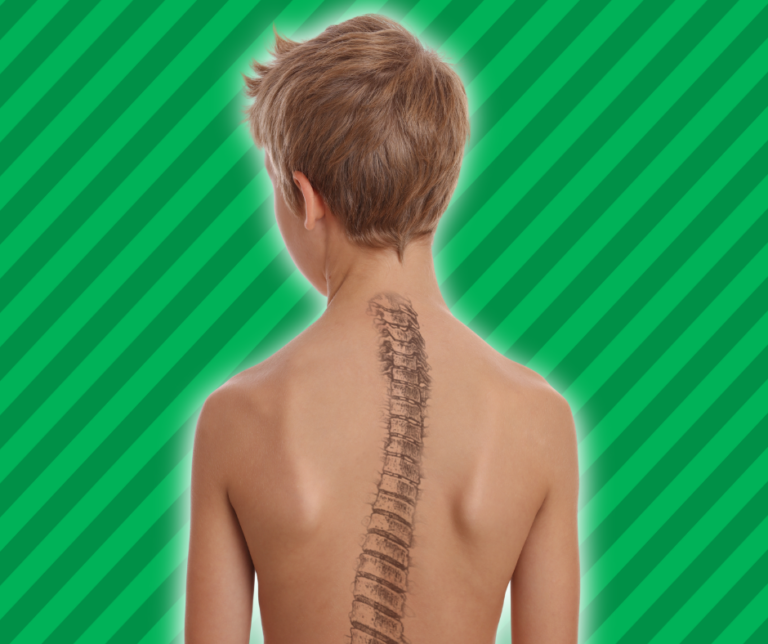
What to Expect in a Schroth Treatment Session for Scoliosis
The Schroth Method is a research-backed, proven treatment to help children, teens, and adults with scoliosis. Schroth Therapy…



Get in touch with Rose
Rose McLean, PT, DPT, c/NDT, is co-owner and lead physical therapist at Chicago Pediatric Therapy & Wellness Center, where she has dedicated over 20 years to helping children with developmental challenges achieve their movement goals. Rose's specialized focus on pediatric physical therapy, combined with her commitment to multidisciplinary collaboration, has made her a trusted resource for families navigating motor delays, neurological conditions, and complex developmental needs throughout Chicago. Rose earned her Doctorate in Physical Therapy from Northwestern University in Chicago in 2004, where she received rigorous training in both pediatric and neurological rehabilitation. She began her clinical career at Cincinnati Children's Hospital, consistently ranked among America's top pediatric medical centers, where she gained invaluable experience treating children with diverse and medically complex conditions. This foundation shaped her evidence-based, child-centered approach to therapy. Beyond her doctoral training, Rose holds certification in Neurodevelopmental Treatment (NDT), a specialized intervention approach for children with cerebral palsy, neurological impairments, and other developmental disorders. She also maintains registration with Illinois' Early Intervention Program, allowing her to provide services to infants and toddlers (birth to age 3) in both home and clinic settings. Rose's therapeutic style is distinctively playful and highly individualized. She invests time in understanding each child's personality, interests, and motivators, then designs sessions that feel like play while targeting specific developmental goals. Whether working on strength, balance, coordination, or motor planning, Rose ensures therapy remains engaging and appropriately challenging. In 2014, Rose partnered with her husband Patrick to establish Chicago Pediatric Therapy & Wellness Center, driven by a vision that pediatric therapy should be comprehensive, collaborative, and convenient. She wanted to eliminate the fragmentation families often experience when their child needs multiple therapies—instead offering coordinated care where physical therapists, occupational therapists, speech-language pathologists, behavior analysts, and social workers communicate regularly about each child's progress. Rose also prioritized creating community spaces where families can connect and children can learn social skills alongside therapeutic development.
Read Less →If you watch a typically-developing seven- or eight-month-old child for an hour, you will see them move and assume a wide range of positions. There is an amazing amount of variety in their movement. Variety is important – we want our children to be comfortable and able to play in sitting, on their back, on their side, on their tummy, just to name a few. Though children who are in that seven- to ten-month-old range may have the ability to try out these different positions, it is just as important to give our young infants experience in a variety of positions.

Tummy time is a great position to put your infant in when they are awake during the day. It helps children to strengthen the muscles of their neck, back, hip and shoulders and it gives the babies a different view their environment. The practice of lifting their heads and chest off of the ground, shifting their weight to reach for toys and rotating their heads to follow a familiar person or object are the building blocks to more advanced gross motor skills. A study has shown that increased time spent on their tummy may be associated with greater gross motor skills in four-month-old children.1 Tummy time also reduces the amount of time that your child spends with pressure on their head, which can reduce the likelihood of deformational plagiocephaly (flat-head syndrome).
You can start working on tummy time when you bring your baby home from the hospital. By the time your child is three months old, he or she should be on their tummy for a total of one hour a day. By the time they are five or six months old, it should be at least 90 minutes of supervised tummy time.
Tummy time can be challenging because it is exercise! Here are some tummy time tips:
Place something interesting to look at in front of your child when they are on their stomach. Very young children (ages 0-3 months) are most interested in toys that are black, white and red. These toys have a lot of contrast and are easier to see.
Place a child-friendly mirror in front of your child. Children ages 0-4 months may be more interested in faces than toys, so use their reflection to keep them entertained while spending time on their stomach.
Use a timer! Start in small increments – place your child on their tummy for two minutes while they are engaged in a toy. As they get comfortable for two minutes, increase to three or four minutes. Every minute of tummy time helps.
Use a rolled up towel roll under your child’s chest for more support. This gives your child a little bit of a boost when they working on lifting their head and chest off of the ground.
Practice tummy time when your child is awake and supervised
Don’t get discouraged. It can take time for children
Remember, “Back to sleep, tummy to play.”
Take the first step towards supporting your child's development.
Rose McLean
 Cara Lucas
 Melina Segneri
Our expert team is here to help. Schedule a consultation today.