

How to Get Your Child Jumping
Walking, running and jumping are the building blocks to gross motor play. Most children learn to jump approximately…


Get in touch with Patrick
Patrick McLean serves as Administrative Director and Co-CEO of Chicago Pediatric Therapy & Wellness Center, a comprehensive pediatric therapy practice he co-founded with his wife Rose in 2014. With over a decade of healthcare business leadership, Patrick has transformed their vision of coordinated, family-centered care into a thriving multidisciplinary clinic serving families throughout Chicago. After graduating from Western Illinois University in 2004 with a Bachelor's degree in Business and Finance, Patrick developed expertise in healthcare operations, strategic planning, and organizational growth. His business acumen combined with a deep commitment to serving children with developmental needs has positioned Chicago Pediatric Therapy & Wellness Center as a trusted resource for families navigating speech delays, sensory processing challenges, autism spectrum disorder, motor delays, and behavioral concerns. As Co-CEO, Patrick oversees essential operational pillars including marketing and community outreach, human resources and staff development, financial management and insurance coordination, and long-term business strategy. His leadership has enabled the clinic to expand from offering single therapy services to providing integrated physical therapy, occupational therapy, speech therapy, ABA therapy, and social work—all coordinated under one roof for maximum family convenience and clinical effectiveness. Patrick's management philosophy centers on creating systems that empower both staff and families. He has built a culture of collaboration where therapists from different disciplines communicate seamlessly about each child's progress, ensuring holistic treatment plans that address the whole child. His proudest moments come from witnessing families' journeys—from initial concerns through celebrated milestones and hard-won achievements. Beyond his professional role, Patrick brings personal perspective as a father of four children. He actively coaches his kids in various sports, enjoys creating barbecue masterpieces on his smoker, and values connection time with friends on the golf course. This balance between professional purpose and family life reinforces his understanding of the families Chicago Pediatric Therapy & Wellness Center serves every day.
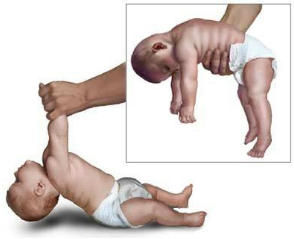
Read Less →Low muscle tone in babies, sometimes called hypotonia or “floppy baby,” is a condition that can affect your child’s development. If a doctor has mentioned low muscle tone, or you suspect low muscle tone, a physical therapist can help.
Tone is a description of a quality of a muscle, but it does not indicate strength. Muscle tone can be described as a muscle’s readiness to move at rest, or as a continuous partial contraction or “on” quality of a muscle. With typical muscle tone, muscles are partially active at rest to maintain postural control and to prepare for movement. For example, even when we are sitting on the couch, we are able to hold our heads up without thinking about it.
With low muscle tone, more of our muscle fibers are less active at rest. It is more difficult to maintain postural control and the body is not as ready for movement, especially fast movement. But that does not equate with muscle strength. Muscles with high tone are not necessarily strong and muscles with low tone are not necessarily weak. Having low tone does increase flexibility and can contribute to decreased strength (just as high tone sometimes has decreased flexibility and increase strength, with many exceptions.) A person with low tone will most likely not be able to engage in “explosive” movements such as needed in a sprinter. These athletes usually have high tone that is within normal limits. A person with low tone may do well in activities that require more flexibility, such as dance and yoga. In a baby with low muscle tone, their muscles are considered too relaxed and likely too flexible, which makes it more difficult to move and develop strength.
Your baby may demonstrate some or all of these symptoms as a result of low muscle tone.
In infancy (0-4 months)
In babies on the move (5-12 months)
Muscle tone and strength are related but different things. While muscle tone is the muscle’s readiness to move, strength is the amount of force a muscle can generate. Typically, babies with low muscle tone also have weakness. However, a baby with low muscle tone can become strong with a little bit of help.
A physical therapist can assess if your baby has low muscle tone. Your physical therapist will determine the best course of action to help your baby get stronger and improve their endurance. Treatment may include exercises to improve head control, core strength, hip strength, and shoulder strength as well as developmental exercises to meet motor milestones. If you have concerns about low muscle tone, please call the pediatric specialists at Chicago Pediatric Therapy and Wellness Center for a physical therapy assessment. We can be reached at 773-687-9241 or info@cptwc.com.
Take the first step towards supporting your child's development.
Patrick McLean
Owner
 Patrick McLean
Owner
Patrick McLean
Owner
 Patrick McLean
Owner
Patrick McLean
Owner
Our expert team is here to help. Schedule a consultation today.