
Generalization in ABA Therapy: How Lakeview Kids Learn to Use New Skills in Real Life
Important Note for Families: This information is for educational purposes only and does not constitute medical advice, diagnosis,…



Get in touch with Patrick
Patrick McLean serves as Administrative Director and Co-CEO of Chicago Pediatric Therapy & Wellness Center, a comprehensive pediatric therapy practice he co-founded with his wife Rose in 2014. With over a decade of healthcare business leadership, Patrick has transformed their vision of coordinated, family-centered care into a thriving multidisciplinary clinic serving families throughout Chicago. After graduating from Western Illinois University in 2004 with a Bachelor's degree in Business and Finance, Patrick developed expertise in healthcare operations, strategic planning, and organizational growth. His business acumen combined with a deep commitment to serving children with developmental needs has positioned Chicago Pediatric Therapy & Wellness Center as a trusted resource for families navigating speech delays, sensory processing challenges, autism spectrum disorder, motor delays, and behavioral concerns. As Co-CEO, Patrick oversees essential operational pillars including marketing and community outreach, human resources and staff development, financial management and insurance coordination, and long-term business strategy. His leadership has enabled the clinic to expand from offering single therapy services to providing integrated physical therapy, occupational therapy, speech therapy, ABA therapy, and social work—all coordinated under one roof for maximum family convenience and clinical effectiveness. Patrick's management philosophy centers on creating systems that empower both staff and families. He has built a culture of collaboration where therapists from different disciplines communicate seamlessly about each child's progress, ensuring holistic treatment plans that address the whole child. His proudest moments come from witnessing families' journeys—from initial concerns through celebrated milestones and hard-won achievements. Beyond his professional role, Patrick brings personal perspective as a father of four children. He actively coaches his kids in various sports, enjoys creating barbecue masterpieces on his smoker, and values connection time with friends on the golf course. This balance between professional purpose and family life reinforces his understanding of the families Chicago Pediatric Therapy & Wellness Center serves every day.
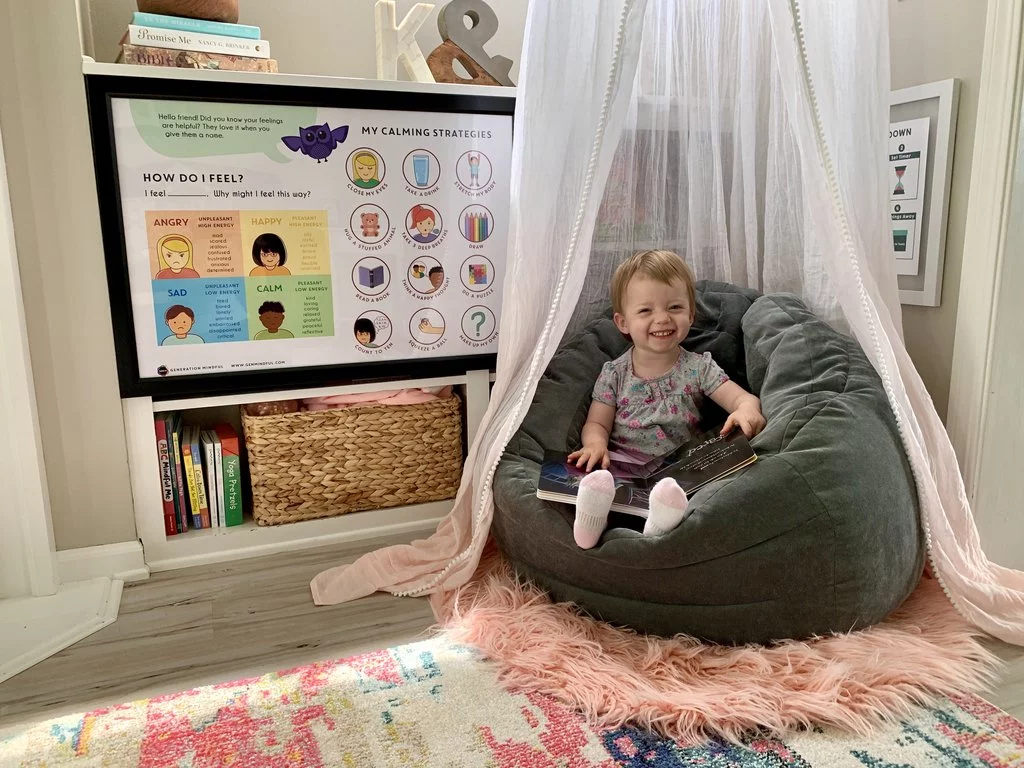
Read Less →A calming corner can be a great tool to help support children’s self regulation needs. These spaces are designed for children to isolate, calm, and re-organize in a meaningful way. A self regulation calming corner can be used to take a sensory break and calm down when they are feeling upset, overwhelmed or overstimulated.
A calming corner can include a variety of activities and tools.
Some children may also benefit from more active choices to help calm their bodies down. Here are some ways to incorporate movement into calming corners that also have a calming effect on the body.

There are two different types of movement patterns that support the sensory systems, proprioceptive and vestibular movement. Both of these types of movement calm the central nervous system through informing the body of where it is in space through providing input to muscles and joints. However, movement is complicated as it can be alerting and calming. What may be alerting for one child, can be calming for another. Trial and error may be required to determine what is effective for your child when introducing movement based calming activities.
Using the calming corner will take practice and coaching at first. Children need to be taught when a break may be needed, but over time children will start to read and understand their body cues and realize when they may need a break. Over time, they will begin to independently seek out these breaks when needed.
This area should be accessible for your child at any time of the day. It should be set up in a central location in the home that the child feels comfortable in. This area is best used when it is at the child’s level, is situated in an area of the home outside of their bedroom and is away from the busier/louder areas of the home (i.e. kitchen, TV, laundry room etc.) and includes sensory supports to encourage calming and peaceful experiences.
The key is to create an environment that is quiet, comfortable, and free from distractions, allowing your child to recharge and regain focus and practice calming techniques that will help them manage their emotions.
Sometimes less is more! You should include one activity per category to provide your child a variety of options but that is not too many that it becomes overwhelming. Activities and options can also be rotated to maintain a sense of novelty and excitement to the calming corner.

This space should never be used as punishment or “time out”, rather should be used as a place where a child can go where they are able to go when they are feeling overwhelmed, overstimulated, frustrated, or upset and need some time and space to get grounded and reset.
This space is NOT to be used for play. Please restrict this area during free play. Please also try to keep items used in the calming corner separate from other toys and refrain from bringing additional items into the calming corner unless they are used as tools.
With permission from your child, you should accompany them into the calming corner in order to help them select appropriate strategies and use their regulation tools appropriately. If your child is upset, modeling from a far can also be a good strategy.

Five minutes should be enough time to allow your child to use this space to calm down. However, use your best judgment. If they need more or less time, that is okay. Using visual timers can also be helpful to support transitioning out of the self regulation calming corner.
If you feel your child needs help navigating big feelings and you could benefit from how to coach your child to cope with these, please call today to schedule an assessment from our pediatric professionals. We can be reached at 773-687-9241 to help with all feelings, big and small! At our clinic, we specialize in ABA therapy for children with autism in the Chicago area. Visit our ABA Therapy Page to learn more!
Take the first step towards supporting your child's development.
Jenna Hultgren

 Cara Lucas
 Nathalie Deutsch
Our expert team is here to help. Schedule a consultation today.