

How to Get Your Child Jumping
Walking, running and jumping are the building blocks to gross motor play. Most children learn to jump approximately…



Get in touch with Rose
Rose McLean, PT, DPT, c/NDT, is co-owner and lead physical therapist at Chicago Pediatric Therapy & Wellness Center, where she has dedicated over 20 years to helping children with developmental challenges achieve their movement goals. Rose's specialized focus on pediatric physical therapy, combined with her commitment to multidisciplinary collaboration, has made her a trusted resource for families navigating motor delays, neurological conditions, and complex developmental needs throughout Chicago. Rose earned her Doctorate in Physical Therapy from Northwestern University in Chicago in 2004, where she received rigorous training in both pediatric and neurological rehabilitation. She began her clinical career at Cincinnati Children's Hospital, consistently ranked among America's top pediatric medical centers, where she gained invaluable experience treating children with diverse and medically complex conditions. This foundation shaped her evidence-based, child-centered approach to therapy. Beyond her doctoral training, Rose holds certification in Neurodevelopmental Treatment (NDT), a specialized intervention approach for children with cerebral palsy, neurological impairments, and other developmental disorders. She also maintains registration with Illinois' Early Intervention Program, allowing her to provide services to infants and toddlers (birth to age 3) in both home and clinic settings. Rose's therapeutic style is distinctively playful and highly individualized. She invests time in understanding each child's personality, interests, and motivators, then designs sessions that feel like play while targeting specific developmental goals. Whether working on strength, balance, coordination, or motor planning, Rose ensures therapy remains engaging and appropriately challenging. In 2014, Rose partnered with her husband Patrick to establish Chicago Pediatric Therapy & Wellness Center, driven by a vision that pediatric therapy should be comprehensive, collaborative, and convenient. She wanted to eliminate the fragmentation families often experience when their child needs multiple therapies—instead offering coordinated care where physical therapists, occupational therapists, speech-language pathologists, behavior analysts, and social workers communicate regularly about each child's progress. Rose also prioritized creating community spaces where families can connect and children can learn social skills alongside therapeutic development.
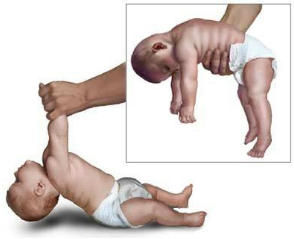
Read Less →Low muscle tone in babies, sometimes called hypotonia or “floppy baby,” is a condition that can affect your child’s development. If a doctor has mentioned low muscle tone, or you suspect low muscle tone, a physical therapist can help.
Tone is a description of a quality of a muscle, but it does not indicate strength. Muscle tone can be described as a muscle’s readiness to move at rest, or as a continuous partial contraction or “on” quality of a muscle. With typical muscle tone, muscles are partially active at rest to maintain postural control and to prepare for movement. For example, even when we are sitting on the couch, we are able to hold our heads up without thinking about it.
With low muscle tone, more of our muscle fibers are less active at rest. It is more difficult to maintain postural control and the body is not as ready for movement, especially fast movement. But that does not equate with muscle strength. Muscles with high tone are not necessarily strong and muscles with low tone are not necessarily weak. Having low tone does increase flexibility and can contribute to decreased strength (just as high tone sometimes has decreased flexibility and increase strength, with many exceptions.) A person with low tone will most likely not be able to engage in “explosive” movements such as needed in a sprinter. These athletes usually have high tone that is within normal limits. A person with low tone may do well in activities that require more flexibility, such as dance and yoga. In a baby with low muscle tone, their muscles are considered too relaxed and likely too flexible, which makes it more difficult to move and develop strength.
Your baby may demonstrate some or all of these symptoms as a result of low muscle tone.
In infancy (0-4 months)
In babies on the move (5-12 months)
Muscle tone and strength are related but different things. While muscle tone is the muscle’s readiness to move, strength is the amount of force a muscle can generate. Typically, babies with low muscle tone also have weakness. However, a baby with low muscle tone can become strong with a little bit of help.
A physical therapist can assess if your baby has low muscle tone. Your physical therapist will determine the best course of action to help your baby get stronger and improve their endurance. Treatment may include exercises to improve head control, core strength, hip strength, and shoulder strength as well as developmental exercises to meet motor milestones. If you have concerns about low muscle tone, please call the pediatric specialists at Chicago Pediatric Therapy and Wellness Center for a physical therapy assessment. We can be reached at 773-687-9241 or info@cptwc.com.
Take the first step towards supporting your child's development.
Patrick McLean
Owner
 Patrick McLean
Owner
Patrick McLean
Owner
 Rose McLean
Our expert team is here to help. Schedule a consultation today.